
Celebrating Riesling: One of British Columbia’s Most Expressive Wines
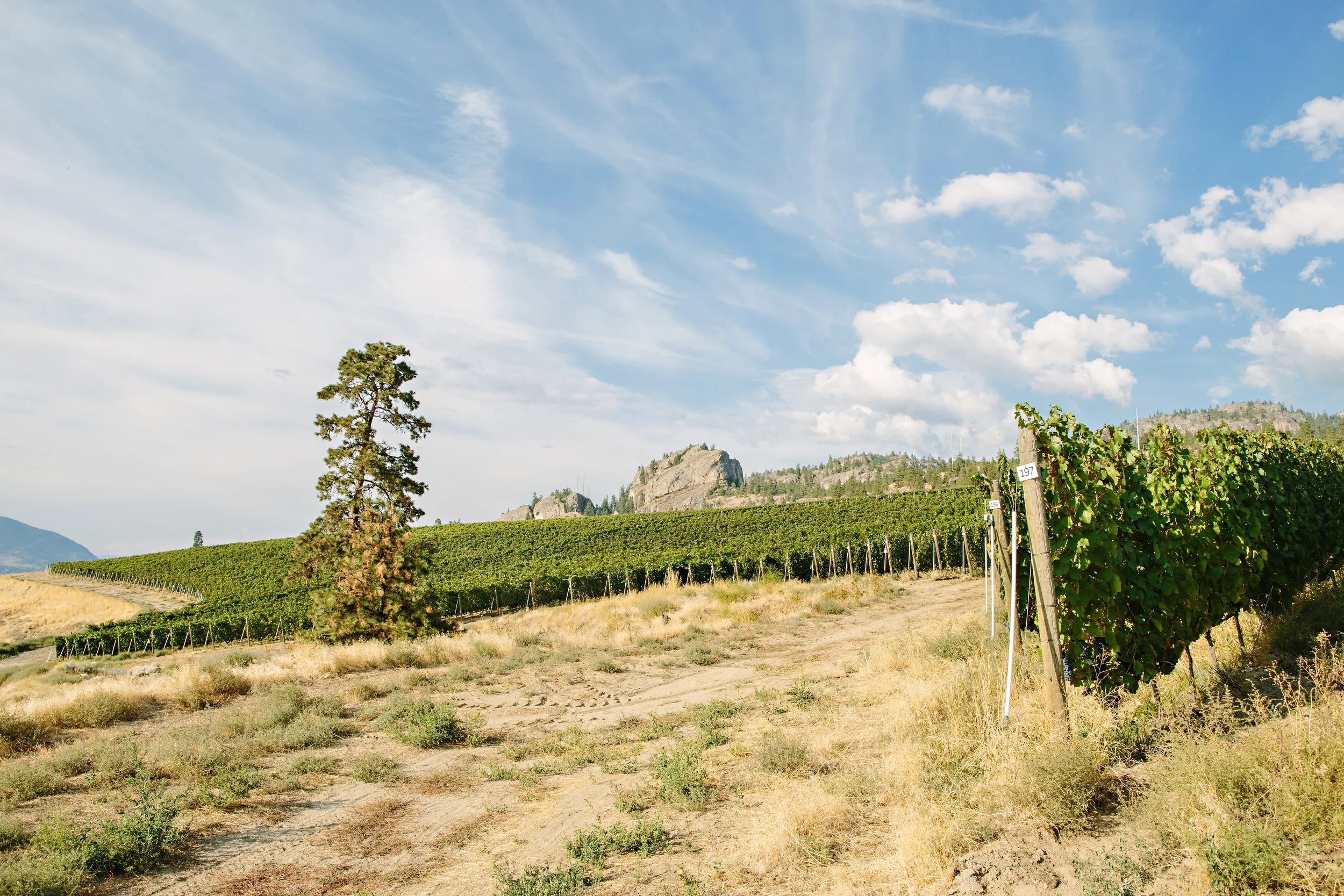
Photo credit: Wines of British Columbia
I make no effort to conceal my zeal for what I consider the King of grapes. Still on my mission to turn everyone into a Riesling fan, I’m showcasing some of the best of BC to celebrate International Riesling Day!
I still believe (and I’m not alone in this) that British Columbia produces outstanding Riesling, and it continues to utterly fail to get the broad recognition and appreciation that it deserves. Will you help spread the word?
The Riesling Signature
With 665 acres planted in BC (as of 2022), Riesling is in 3rd place of white wine grapes. This figure has likely increased lately, as some wineries like Lightning Rock in Summerland have pulled up freeze-damaged vines of less cold-hardy varietals and planted Riesling in their place. In Kelowna, West Kelowna, and Lake Country - cooler regions compared to the South Okanagan - Riesling is in the top 4 planted grapes of either colour.
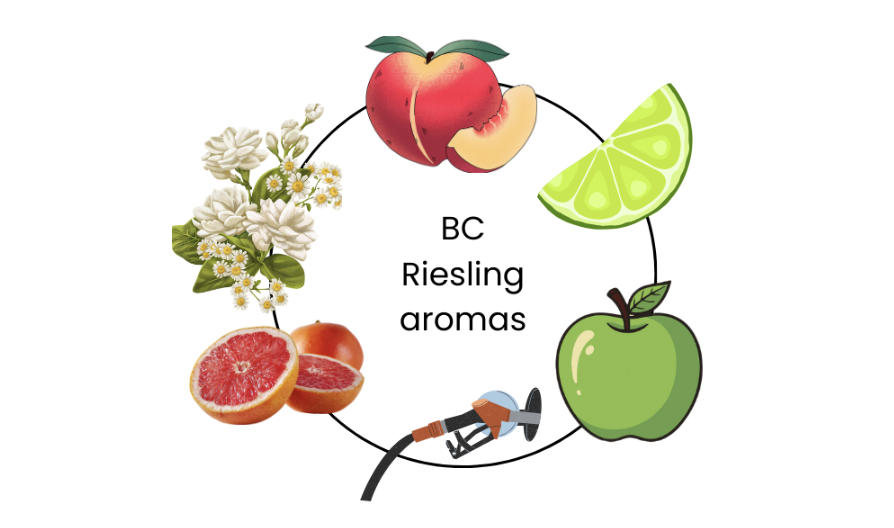
Riesling is a variety tracing back to the 15th century in Germany’s Rhine Valley. It can be vinified as still or sparkling, dry, off-dry, ice wine, and with varying degrees of sweetness from botrytis. Riesling’s elevated natural acidity carries it through all these diverse styles, and also makes it particularly age-worthy. The typical flavour profile is citrus and orchard fruits like lime, grapefruit, apple, pear, peach, and apricot. Its characteristic floral aromatics include white blossoms like jasmine and honeysuckle, and a distinctive gasoline-like aroma called trimethyldihydronaphthalene, or TDN.
The beauty of Riesling is in where the balance lies between acidic and sweet, the ripeness of the fruit character, and the fullness of the texture. These separate elements work together to define each bottling, according to a particular style. Versatility is absolutely its strength.
Riesling is an excellent food partner, as its bright acidity acts as a palate cleanser. Conventional pairings are with asian cuisines, especially for wines with a bit of sweetness that can counteract spicy dishes. Sushi, Korean chicken, Thai noodles, sweet and sour, and Indian curries can all work well. German dishes with pork, onions, and cabbage are other great options. The list goes on. Sweeter versions also pair famously with not only desserts like poached pears or apple strudel, but salty blue cheese. As long as the wine tastes sweeter than the food, it’s really hard to go wrong.
Why BC Riesling works - and when it doesn’t
When it comes to expressing its origins, Riesling is like the white wine version of Pinot Noir. Subtle differences in growing conditions and winemaking decisions are transparent in the final wine. This often makes for an exciting drinking experience.
Riesling is considered a cool-climate varietal, performing best in long growing seasons of overall moderate temperature. BC offers precisely that environment, with cool nights that preserve the grape’s naturally high acidity. This acidity gives wine freshness, energy, and makes food pairings more enjoyable.
But it’s a double edged sword. Soaring acidity unmitigated by stylistic winemaking choices creates a puckering experience only the most sadist of consumers (with excellent dental plans) can enjoy. The classic style established by the Germans generations ago is to ferment and/or age in large, neutral barrels, and stop the fermentation before it’s fully complete. The resulting soft texture and subtle sweetness perfectly balance the elevated acidity.
As the market continues to shift towards drier styles, complete fermentation in stainless steel is common, to preserve aromatics, followed by a short period of lees contact to soften the edge. Some traditionalists maintain a healthy residual sugar content for an approachable, easy-drinking style. The modern approach is gastronomic in style, fermenting fully dry and doubling down on bright acidity and its ability to support a broader variety of food pairings. This style is popular with sommeliers and wine critics.
For me, my beginnings in discovering the world of wine are in the Rieslings of Germany’s Rheinhessen and Rheingau regions where I spent much formative time. That exposure underpins my passion for this misunderstood wine. It also serves as a benchmark when tasting new wines, referring back to the work of Old World masters. None are right or wrong, but standards have been set.
BC Riesling works best when cropped to lower yields to increase concentration, when permitted a little extra hang time on the vine to push flavour ripeness, and when the acidity is checked by textural softness or balanced sweetness. Wines that are too thin, too green, or too sharp will not help Riesling’s reputation. From what I’ve tasted in BC, this is rarely a problem.
Eight of BC’s best Rieslings are featured below, all kindly provided by the wineries for this article. I have listed the alcohol (percentage) followed by sugar level (in g/L residual sugar) for each wine, to help give you an idea of the style.
Featured Wines
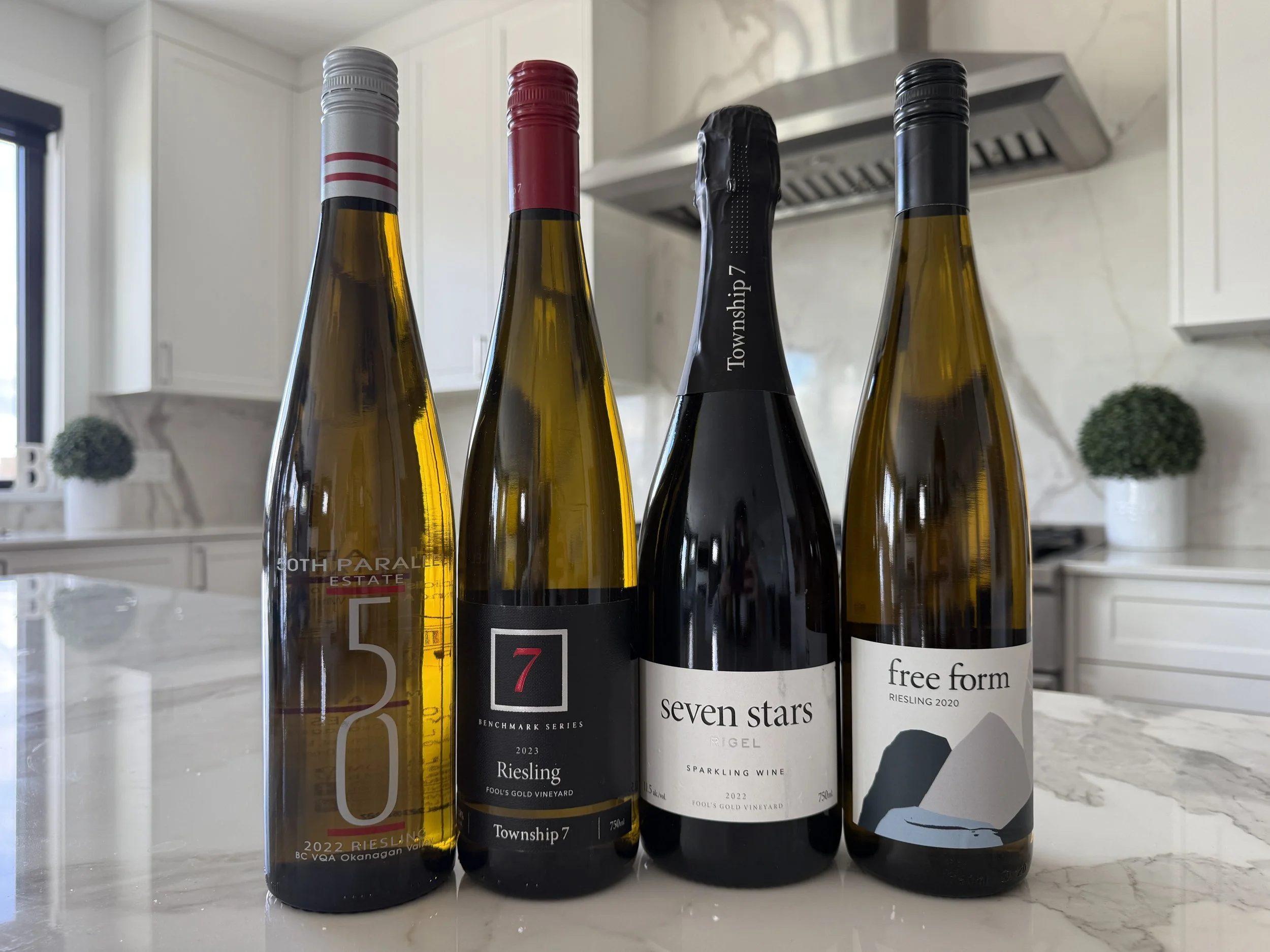
50th Parallel 2022 Estate Riesling
Gold, National Wine Awards of Canada
12.1% abv; 4.1 g/L RS
Exemplifying the cooler climate of Lake Country, this Riesling is destemmed and crushed before cold fermentation in stainless steel. Typicity has been nailed on every level. Intense lime peel, jasmine, TDN, white peach, mandarin, and molten steel aromas signal that this is Riesling fully understood. Dry with high acidity, the balance comes from juicy texture, ripe fruit and a stone foundation. The North Okanagan can produce formidable Rieslings. This is the archetype.
Township 7 2023 Benchmark Series Riesling
12.8% abv; 4.9 g/L RS
Pioneering BC viticulturalist Richard Cleave planted this block of Riesling in North Oliver’s Fool’s Gold Vineyard. The fruit is pressed and fermentation takes place in mostly concrete vessels, and a small portion of stainless steel. This vintage saw reduced yields from cold damage and hot summer temperatures. A quiet and unassuming Riesling at first, the aromas of lemon peel, apple, peach, and white blossoms are almost hinting at a coming spring. The palate is off dry with rounded and slightly creamy acidity. A phenolic remnant is bitter on its own but readily quenched with cheese or smoked sausage. People skeptical (or cynical) of Riesling should start here. Gentle and reassuring.
Township 7 2022 Seven Stars Rigel
11.5% abv; 10.4 g/L RS
Joining Township 7’s Seven Stars series of traditional method sparkling wines is this 100% Riesling from Fool’s Gold Vineyard in North Oliver. Cold-settled free-run juice is fermented in stainless, aged en tirage for 12 months, followed by disgorging and dosage. When Riesling is glammed up, transformed yet still recognizable, another personality is revealed. This mirrors what’s happening with modern Winzersekt produced by small, quality-minded German producers. Delicate and pure yellow apple, Asian pear, and peach with sugar cookie crumb are accented by daisies and a dollop of yogurt. With a classic Champenoise finish, this wine is another demonstration of winemaker Mary McDermott taking BC sparkling to celestial heights. A stellar sparkler.
Freeform 2020 Riesling
12% abv; 0.1 g/L RS
Farmed on the magical Garnet Valley Ranch on mixed soils of sandy loam, granite, volcanic matter, and limestone, this Riesling is whole-bunch pressed and fermented in stainless steel with ambient yeast. With such little intervention and 5 years now in bottle, this wine has much to say. Deep gold in colour, there are intense aromas of charred lemon and peach, honeysuckle, orange zest, spice, and TDN. The tertiary realm has been breached, offering aromas and flavours of dried apple, ginger snap, and honey. A long finish of citrus peel and dried apples closes the experience of this mature Riesling. With an oxidative profile, it’s ready for Riesling fanatics now, but has the crisp acidity and textural grip to facilitate further development. Top notch sense of place.
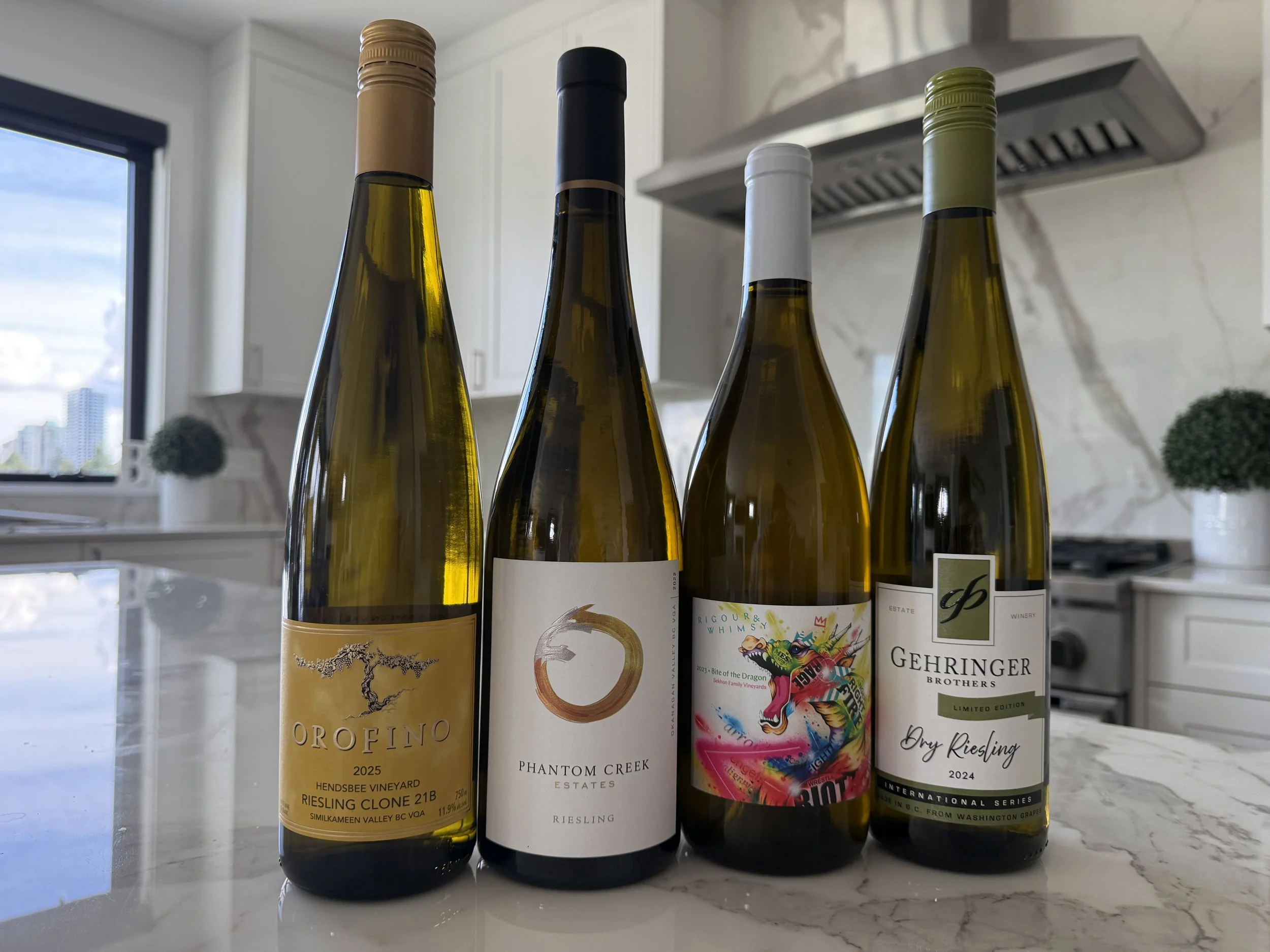
Orofino 2025 Hendsbee Vineyard Clone 21B Riesling
11.9% abv; 26 g/L RS
Orofino has 2 different Riesling clones planted and they are bottled separately. This is 100% clone 21B, originating in the Mosel valley, and Orofino’s vines are now 19 years old. The nose is characteristically fruit-forward and approachable, with a soft and pure combination of apple, citrus, peach skin, honeysuckle, and Okanagan pear. Like in many Mosel bottlings, TDN is virtually absent, and the medium dry expression (semi-sweet) echoes the classic young Kabinett style. Another example of a BC producer who understands Riesling. Lovely.
Phantom Creek 2022 Riesling
14% abv; 7.83 g/L RS
100% estate Riesling from the Black Sage Bench is picked in multiple stages between Sept 30 and Oct 19 for a layered profile, matured partially in oak casks (60% Austrian, 10% French) and finished in stainless steel. A more premium style is evident, showing up as subtle spice, dill, and buttercream integrated with ripe apple, lemon curd, blossoms, and dried apricot. Ripe acidity and a rich finish facilitate gastronomy such as sablefish with a creamy miso sauce. A South Okanagan flagship Riesling.
Rigour and Whimsy 2023 Bite of the Dragon
12.5% abv; 3.2 g/L RS
Sourced from Sekhon Family Vineyard in Osoyoos (certified organic), this small-lot Riesling is whole-cluster pressed, fermented in neutral barrels, and finished in stainless. Bottled under cork, the wine’s warm yellow glow suggests a higher-end, generous style. The nose and palate present a mix of fruit and savoury elements: lime, jasmine, white peach, tangerine, TDN, fennel, tomatillo, and wet stone. It’s a rich, layered expression with a long finish driven by great concentration and juicy acidity. Lush and ripe.
Gehringer Brothers 2024 International Series Dry Riesling
Platinum, Great Northwest Wine Awards
Gold, Cascadia International Wine Competition
Silver, Trends Magazine Top Wine Awards
12.2% abv; 6.7 g/L RS
Sourced from Washington state when BC vineyards were recovering from severe freeze damage, this Riesling is made in the traditional house style using 100% free run juice. It’s very approachable and soft, with juicy peach, apricot, and lemon lime candy accented by whispers of jasmine. Layers of coconutty, vanilla warmth make this more of a comforting trifle than a dazzling, electric display. But I believe that was the intent. At $16.49, this represents immense value for a delicious and award-winning wine. Quality at scale.
Final Thoughts
Riesling’s versatility is virtually unmatched, and fans love its refreshing acidity and delicate balance in the right hands. The wines featured here show why BC Riesling is amazing. Spanning the spectrum from simple and fruity, to rich and textured, to electric and age-worthy, we have well-made examples in every category. With a multitude of trophies and medals, BC is blessed with plenty of approachable and food-friendly Rieslings, ready to be discovered. Am I making my case yet?
Blog post written by: Matt Tinney, Contributor, uncorkBC