
Rosé All Day: Celebrating BC’s Best Pink Wines
On the fourth Friday in June, the world celebrates International Rosé Day. The holiday originated in Provence, the southern French region famous for this wine style. Although rosé has been a staple there for generations, the inaugural celebration was just in 2018. It should be no surprise that rosé has enjoyed a monumental rise in popularity over recent decades.
It no longer gets the side-eye, as a victim of assumptions and aspersions. Most of the time you can expect a dry, refreshing, fruity wine. The advent of social media, especially photo-centric instagram, has almost certainly helped boost the global perception of rosé, with its attractive range of hues. It’s definitely the most beautiful wine to look at. On top of that, rosé offers a unique and refreshing alternative to traditional red and white wines, especially for younger wine enthusiasts. Most importantly, it’s a fantastic wine style, just as worthy of appreciation, curiosity, and discovery as any other.
Not only has interest in rosé grown in the past 20 years, but the quality as well. Like all wines, rosé has benefitted from improvements in winemaking technology and vineyard management, and the results speak for themselves. Rosé has been recognized as its own category at the All Canadian Wine Awards since 2001, and at the National Wine Awards of Canada since 2017. International publications like Decanter also have awards specifically for rosé wines.
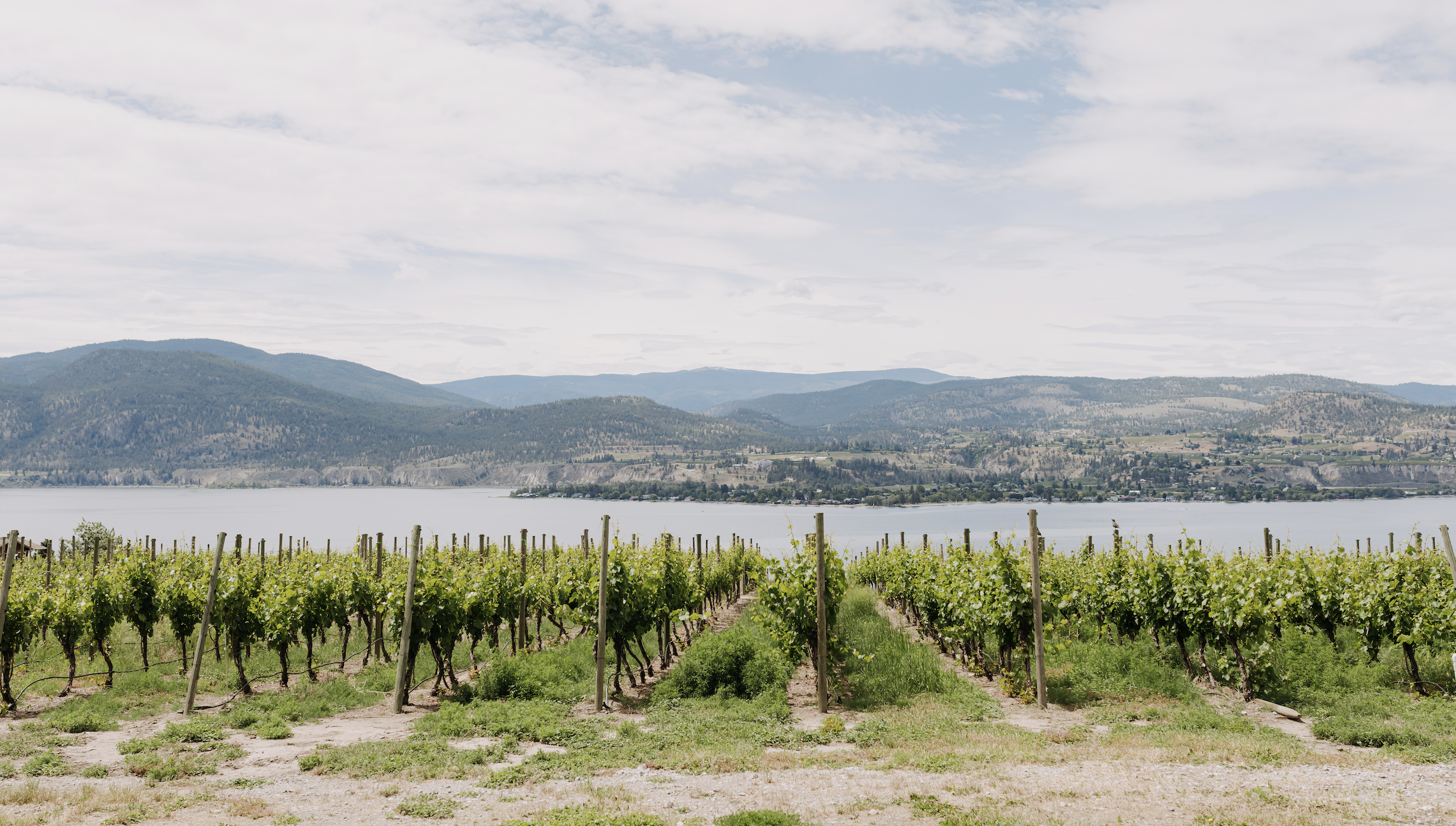
Rosé wines can be made with any of the same grapes used for red wine. In Provence it’s usually Grenache, Mourvèdre, Cinsault, Syrah, and others. In BC, producers often use a portion of their workhorse red varietal. Increasingly, we are seeing viticulture dedicated specifically for rosé production. This is often Pinot Noir, Merlot, Syrah, or Cabernet Franc. It can be a blend, but is more frequently single-varietal.
How is rosé made? It’s a relatively straightforward but still very technical process to produce quality wines. Some are made via direct pressing, where the juice is pressed out of the grapes and immediately separated for fermentation. This method results in the most delicately coloured wines, as skin contact is minimized.
Others are produced with a brief period of maceration. Since colour and tannins as well as aromatic compounds are extracted from the grape skins, the right balance is needed by the winemaker to achieve fruity character, freshness, aroma, and minimize astringency.
The saignée method, which draws off lightly tinted wine early during red wine making, can also be used to produce rosé, and more concentrated red wine at the same time. The vast majority of rosé in BC is produced by direct pressing or short maceration. Either way, once the juice is separated from the skins, rosé is produced in the same manner as white wines. Lees contact can be employed to provide complexity and a creamier mouthfeel. Oak barrel aging is rarely used, but when it is, it is minimal. Rosé is always meant to be drunk young and fresh.
Although rosé is heavily marketed during warmer months, it is a delicious and versatile wine to be enjoyed year round. It is typically produced with 11-12% alcohol, and the best examples have food-friendly and mouth-watering acidity to go along with flavours of citrus, melon, red fruit, as well as floral and mineral character. They pair well with salads, seafood, grilled meats, cheeses, and off-dry examples with a little residual sugar can match well with spicy dishes.
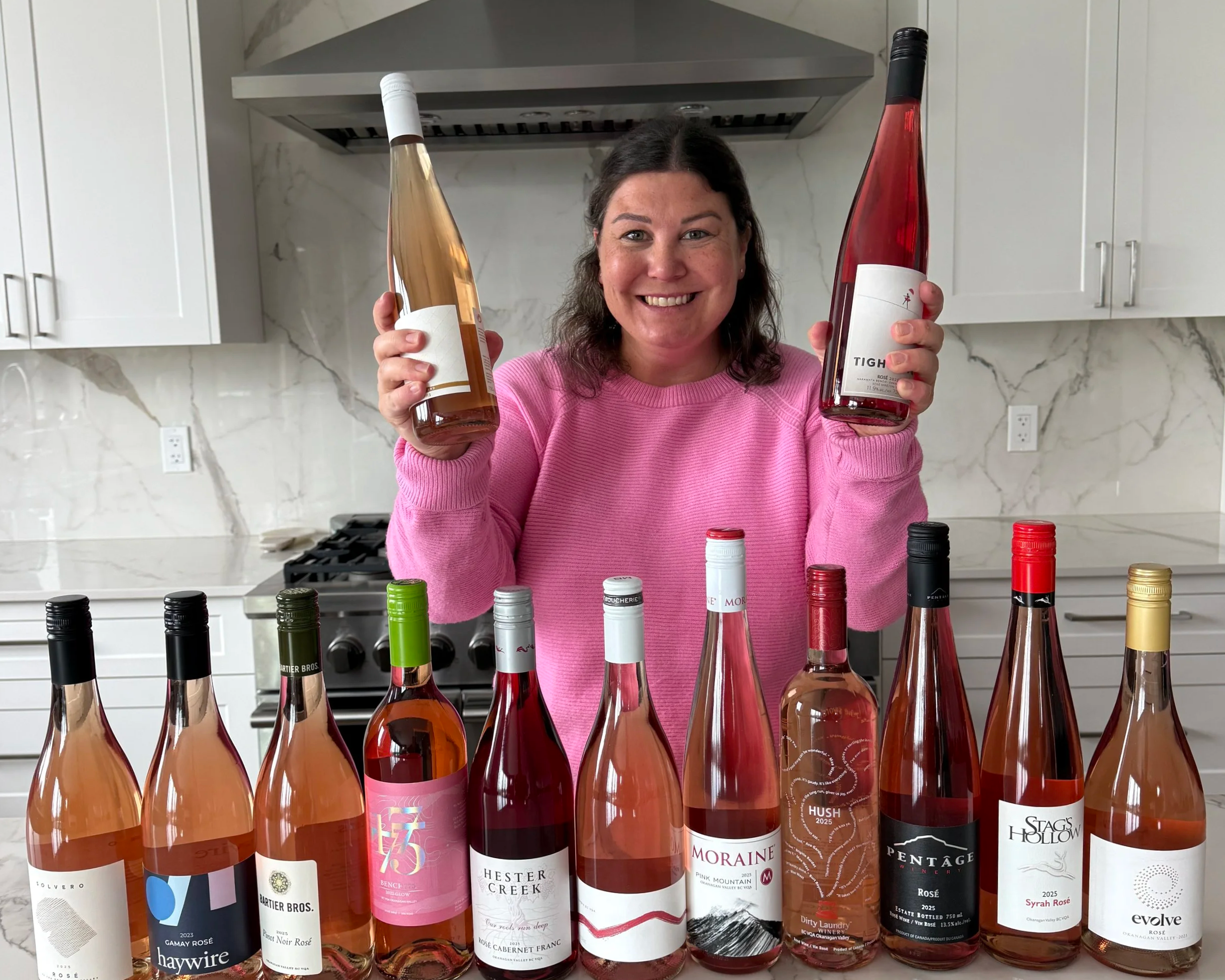
Below are 13 gorgeous BC rosés kindly provided by the wineries for this feature, and my reviews for each. I’ve categorized them under two different styles of rosé: Pure & Polished (for the more Provence-oriented wines of finesse and sophistication), and Fun & Fruity (for the juicy and off-dry leaning daily sippers).
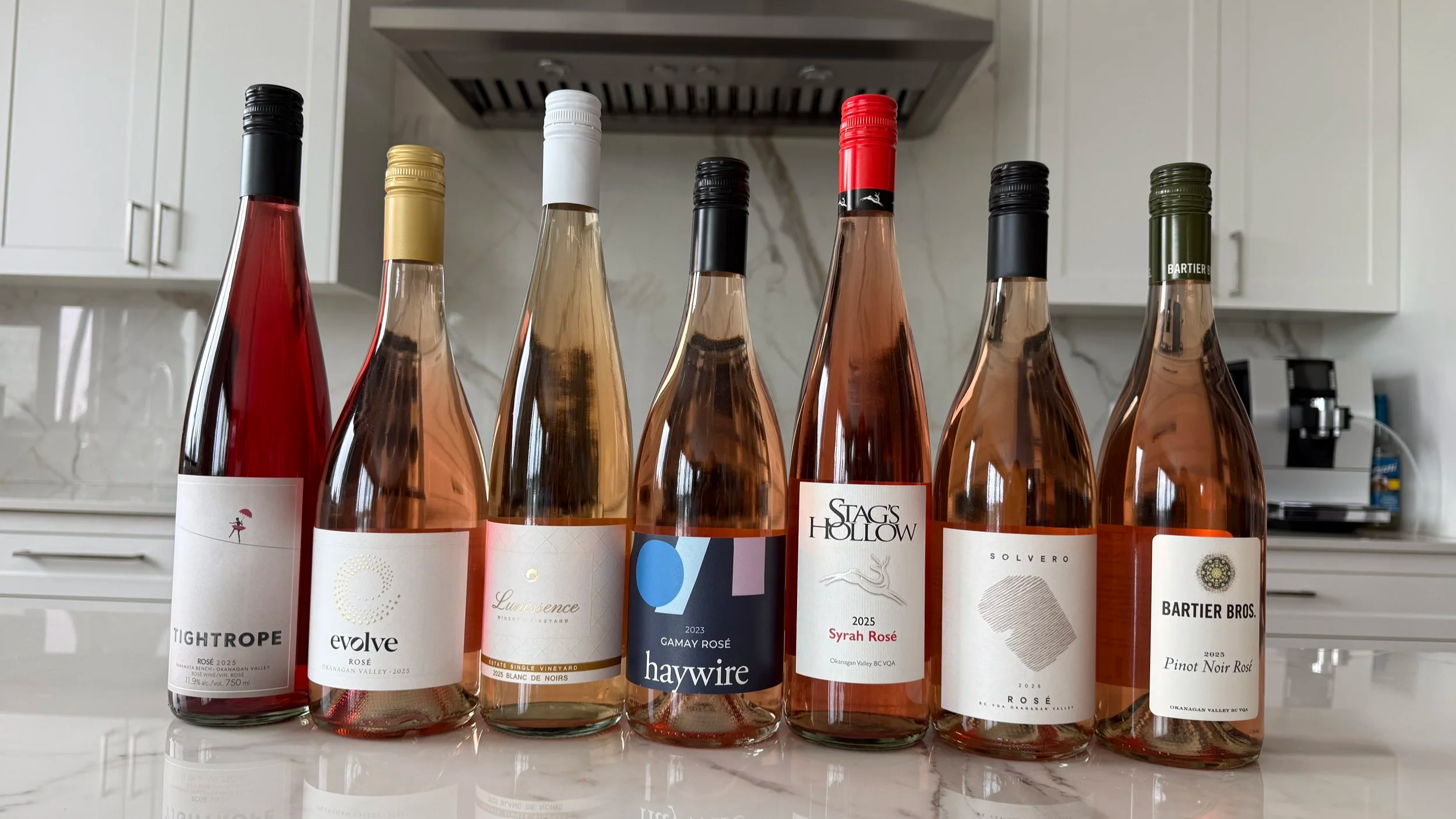
Pure & Polished
Tightrope Winery 2025 Rosé
Composed of 95% whole-cluster pressed Pinot Noir and 5% Barbera from Fleet Rd Vineyard on the Naramata Bench, this has a beautiful cherry red hue. Berries, citrus, plum compote, and Rainier cherry on the nose surge onto a tart and full-flavoured palate marked by bright acidity and a tightly drawn, fruity finish. There’s nearly 8g/L residual sugar but it’s swallowed up by all that electric acidity, leaving it dry and palate-rinsing, and great with food.
Evolve 2025 Small Lot Rosé (Silver, All Canadian Wine Championships)
100% Syrah from a single vineyard in Osoyoos is used for this rosé. Evoking the French Riviera with a soft coral pink, this is a delicate and sensible rosé for rosé lovers. It’s brushed with citrus, apple, strawberry, and cherry aromas, while the palate offers an approachable, soft acidity and classy finish of red fruit skin. Well crafted, with Okanagan summer in mind.
Lunessence Winery & Vineyard 2025 Blanc de Noirs
Blending Merlot and Syrah from the Summerland Bench estate, 25% of the fruit is foot trodden and 50% destemmed, undergoing partial malolactic conversion, and 5 months aging in neutral oak and stainless steel. Although the palest shade of gilded peach, your typical poolside rosé this is not. This Blanc de Noirs carries steely aromas of blossoms, cranberry, citrus, dried dill, and orchard fruit skin. A swell of rounded acidity sets the fulcrum for the balancing act of ripe but graceful fruit, and savoury spice. A rosé for Chardonnay lovers.
Haywire Winery 2023 Gamay Rosé
Made from 100% whole-cluster pressed Gamay, native fermented in concrete and stainless steel, and aged 8 months. This is a wine critic’s rosé, delivering levels of complexity in a pale pink-orange package. It is bone dry and grippy, with sharpened aromas of citrus, berries, herbs, and spice. There’s an earthy yeast component as well, like whole-grain crackers which echoes on the finish. The body is spare and agile, concealing nothing. Texture reigns here.
Stags Hollow Winery 2025 Rosé
Two rosé-dedicated blocks in Osoyoos and Okanagan Falls produce the Syrah for this pale sunset-orange rosé. The inspiration from Southeast France is evident - crisp aromas of citrus peel, apple, cherry, and spice, and a zesty palate of concentrated fruit flavours and ripe acidity. A slight bitter edge to the finish adds refreshment and welcomes diverse food pairings. Provençal freshness with BC precision.
Solvero 2025 Rosé
Solvero is emerging as a serious producer of Pinot varietals and Chardonnay in the Garnet Valley of Summerland. Winemaker Allison Moyes makes this pale orange-peach rosé from Pinot Noir, half destemmed and half pressed whole-cluster. Fermentation is 90% in stainless steel and 10% in neutral barrel. There’s an enticing nose of citrus, red currant, white cranberry, and mild herbaceous spice aromas. Dry and lighter in body, it is restrained throughout, finishing elegantly on bitter peach flavours. Only 270 cases produced.
Bartier Bros. Vineyard and Winery 2025 Pinot Noir Rosé
Okanagan Pinot Noir ripened very well in 2025, expressed transparently here in this pale salmon rosé. Delicately fragranced with Rainier cherry, cranberry, grapefruit, blossoms, and seasoned with spiced apple, the pure fruit flavours are mirrored on the palate. It is dry, the body is slim, and the finish is extended by dashing citrus and red berry notes. Suitable for a wide variety of foods. Elegant, effortless purity.
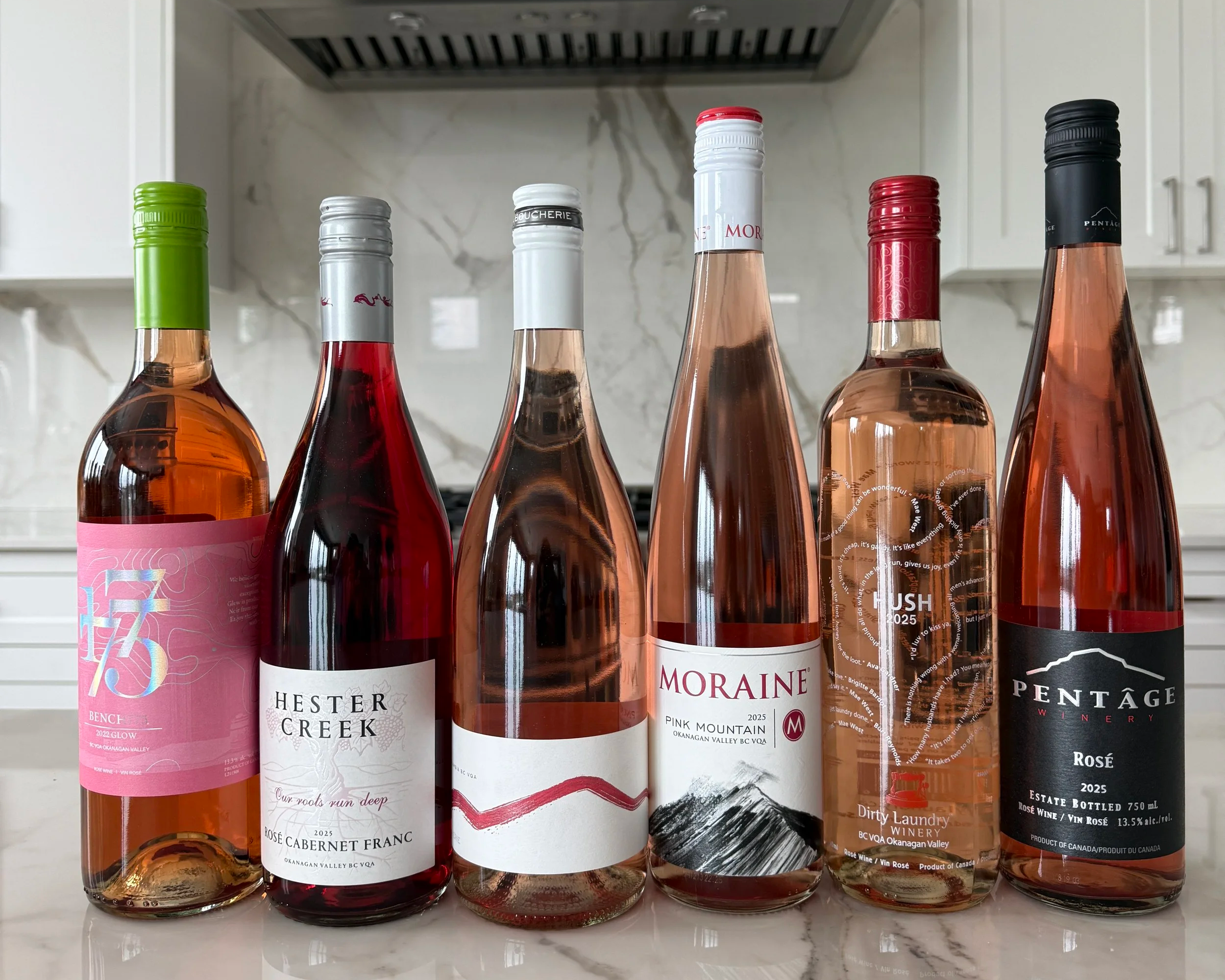
Fun & Fruity
Bench 1775 2022 Glow (Gold, 2023 All Canadian Wine Championships; Bronze, 2023 National Wine Awards of Canada)
100% Pinot Noir comes from two Naramata vineyards, harvested 3 weeks apart. With 2025 releases from Bench 1775 consisting of Pinot Gris and Sauvignon Blanc, the current rosé is still the 2022 vintage. Originally tasted for this series in 2024, both colour and character have shifted. More orange on the palette and palate, there are aromas and flavours of overripe watermelon, crabapple, orange peel, cranberry, and spice. While the vibrancy of the fruit has faded, the acidity sustains some mid-weight snap. Evolved, with lingering freshness.
Hester Creek Estate Winery 2025 Rosé Cabernet Franc
3 days of skin contact give this rosé a deep raspberry red colour and dense character that set this wine apart in the category. Bucking the Provence trends, the nose offers intense spiced plum, raspberry fruit leather, and Cabernet’s capsicum side. The rich fruit bumps up the body but is well managed by refreshing acidity. Candied red fruit lingers on the finish. Complement with some aged salami and hard cheeses.
Mt. Boucherie Estate Winery 2025 Rosé
A field blend of Pinot Noir and Zweigelt and perfectly pale pink. This rosé opens vivaciously with concentrated red berries, ripe nectarine, honeysuckle, sweet grapefruit, and a reductive matchstick note. Fruit intensity carries through the finish, and the medium body sits just right. Well structured for broad appeal, this has all the refreshment and fruity enjoyment for a wonderfully easy-drinking rosé - not to mention great value at $22.99.
Moraine Estate Winery 2025 Pink Mountain Rosé
Mostly Pinot Noir is used for this pale salmon rosé from the Naramata Bench. Soft aromas of citrus, strawberry, and apple-rhubarb precede the off-dry and highly approachable fruit salad flavours on the palate. Well-tended vines and well-timed harvest ensure a wine well-invigorated with fresh acidity to balance the sweet fruit. Going against the trend of a fully dry, tart style can work if it’s made right - this will disappear easily.
Dirty Laundry Winery 2025 Hush Rosé
The components for this vintage are majority Cabernet Franc and Merlot. Consistently one of BC’s most popular rosés, this is pale pink-orange and smells of grapefruit, raspberries, blossoms, and a little spice. It is a crowd-pleasing style, refreshing and flirtatious, fit for any patio party or quiet summer evening. Slightly drier than previous vintages, and an easy-going summer companion.
Pentâge Winery 2025 Rosé
A rosé like no other in BC, this is a blend of 46% Syrah, 26% Zinfandel, 16% Mourvèdre, and 15% Merlot off the sunny Skaha Bench. All varietals were treated separately, with about 16 hours skin contact for a watermelon colour. Ripe red fruit and citrus aromas provide lift, with a sprinkling of spice. The palate is slightly off dry and superbly welcoming, vibrating with freshness and ripe red fruit character, finishing softly with cherry licorice. Uncommonly charismatic.
Final Thoughts
As a category, rosé is obviously thriving and shows no signs of fading. Quality continues to rise, and with increasing dedication specifically to rosé production, BC rosés are consistently delivering something special.
I hope I’ve dispelled some misconceptions and maybe convinced you that rosé wines have much more to offer than just a summer fling. They’re anything but basic. Bring a rosé to your next picnic, backyard barbecue, romantic dinner, or evening alone on the couch. Make sure there’s a rosé available at your wedding, corporate party, or other formal event. No one in any of these scenarios will be disappointed!
Blog post written by: Matt Tinney, Contributor, uncorkBC