
Discover BC Pinotage: A Bold Red Worth Exploring
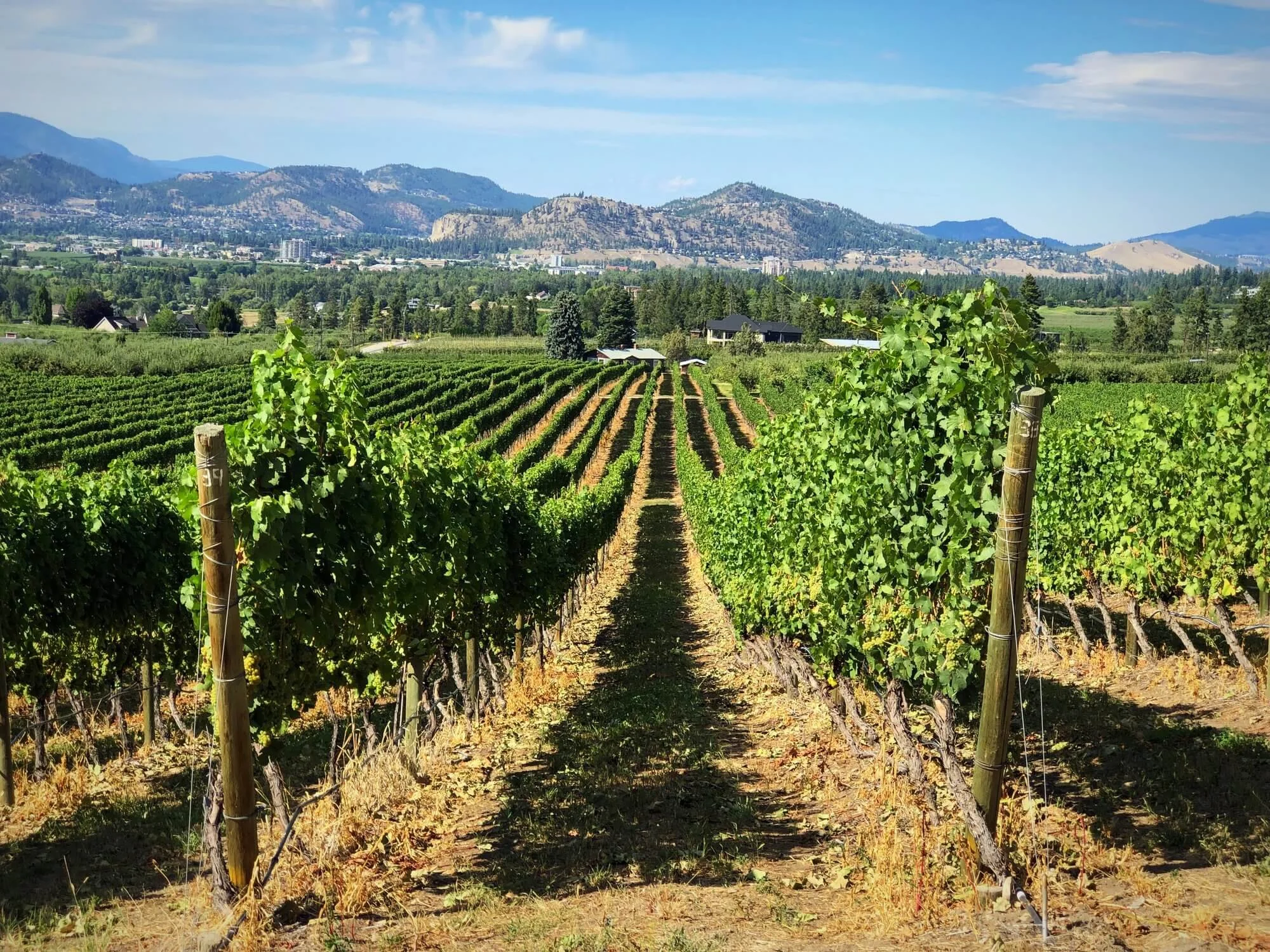
Photo credit: The View
While grapes like Pinot Noir, Pinot Gris, and Merlot account for much of BC’s vineyard acreage, the remainder includes a long list of lesser-known varieties. Some occupy only a fraction of a percent of the province’s vineyards, yet can form a central part of a winery’s identity. Sometimes a grape doesn’t need much acreage to find its voice.
That’s worked out well in the case of Pinotage, a signature South African grape that has found two champions in BC. But what is Pinotage, and why does it make sense here?
Bred in South Africa in 1925 by crossing Cinsaut (then known locally as Hermitage) with Pinot Noir, Pinotage was nearly lost before the original seedlings were rescued. Growers subsequently found it easier to cultivate than Pinot Noir, with the first commercial planting established in 1943. Today it is South Africa’s signature—although not its most widely planted—grape variety.
Pinotage is best known for deeply pigmented reds, often with robust tannins and flavours of dark fruit, bramble, earth, and smoke—a fitting match for the South African custom of braai. But that familiar profile tells only part of the story, as BC producers have discovered.
How and when Pinotage came to BC has been somewhat murky, but its history here can now be traced to just a few growers, and one important connecting figure. The earliest documented appearance of Pinotage appears to have been at Lake Breeze Vineyards on the Naramata Bench in the 1990s. Lanny Martiniuk propagated those vines from plant material sourced from UC Davis; concerns over viruses prevented importing vines directly from South Africa. Martiniuk retained some of that material and, in 1998, planted Pinotage on his newly purchased Oliver property, now the Stoneboat Vineyards estate. Those original, own-rooted vines remain the basis of Stoneboat’s two Pinotage blocks today.
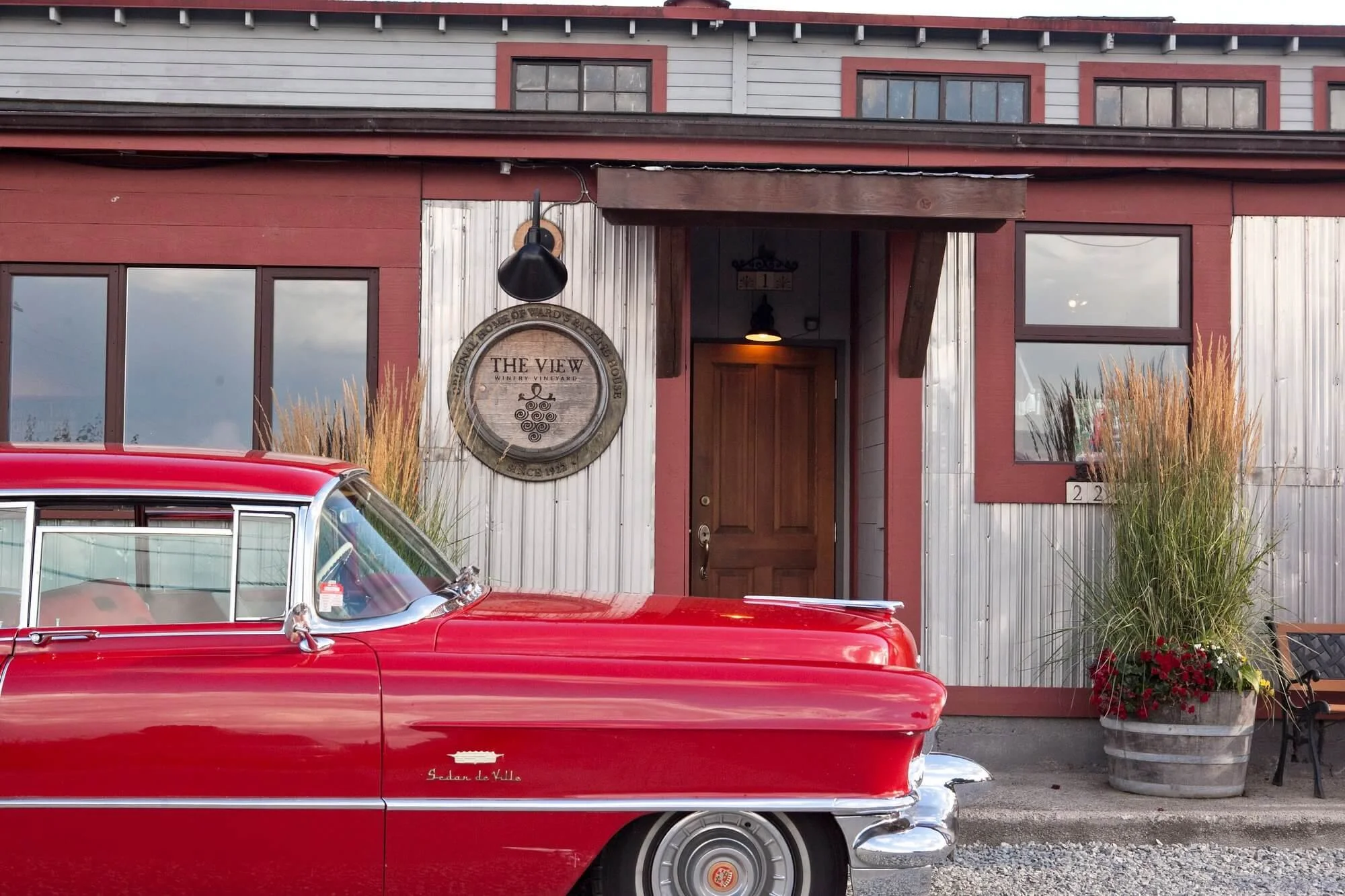
At almost exactly the same time, another Pinotage story was developing in East Kelowna. Chris Turton, founder of The View Winery, had fallen for the variety while visiting South Africa in the 1980s. An avid hunter, he particularly enjoyed Pinotage’s rustic, smoky and earthy character alongside wild game. His plan to grow it in the Okanagan was met with skepticism - which, according to his daughter (and current winery President) Jennifer Molgat, only made him more determined.
“The original plantings were propagated from cuttings that he smuggled in from California on the roof of his camper van,” shares Molgat. After establishing that the variety could grow in Kelowna, he followed the proper channels to import certified vines. These, too, were propagated by none other than Lanny Martiniuk in the mid-to-late 1990s.
Pinotage, therefore, became a foundational variety for both Stoneboat and The View, with Martiniuk playing a critical role in establishing it at both properties. The View now farms 8 and a half acres, while Stoneboat maintains 2 blocks totaling 2.1 acres planted in 1998 from the original Lake Breeze material. Together, the two wineries steward a substantial majority of BC’s Pinotage.
You could argue that Pinotage is one of BC’s rarest commercially significant vinifera varieties. The key to its success is not that BC replicates South Africa’s environment. Some of the characteristics for which it was bred—relatively early ripening, moderate vigour, and robust berries—happen to address common challenges of growing red grapes in BC.
The January 2024 cold event added another unexpected piece of evidence. According to General Manager Andrew Young, Pinotage showed the strongest recovery at Stoneboat after the freeze. Although significantly damaged, its own-rooted vines could be retrained and the estate's two blocks returned to roughly full production for the 2026 vintage. The View benefited from the same decision made decades earlier: its Pinotage is also own-rooted, allowing damaged vines to be regenerated through renewal pruning.
That doesn't make Pinotage particularly cold hardy. Rather, it shows how a combination of variety, site and decisions made at planting can contribute to resilience. Nearly three decades after Pinotage was planted at both estates, it has survived skepticism, heat domes, and cold snaps in turn, each time refusing to concede its relevance.
The View Winery interprets Pinotage further through BC winemaking, showing what happens if it’s not treated as simply a South African red made elsewhere. For the past decade, they have been producing a still white Pinotage (Blanc de Noir) and a Pinotage rosé in addition to a red. This shows that what Pinotage has become at The View has evolved from the reason it was established in the first place. It also illustrates something important about BC’s wine landscape: obscure varieties don't need to become the next big thing to matter. They can fill small but compelling niches that take advantage of BC’s climatic diversity. In that regard, Pinotage may be one of the best examples.
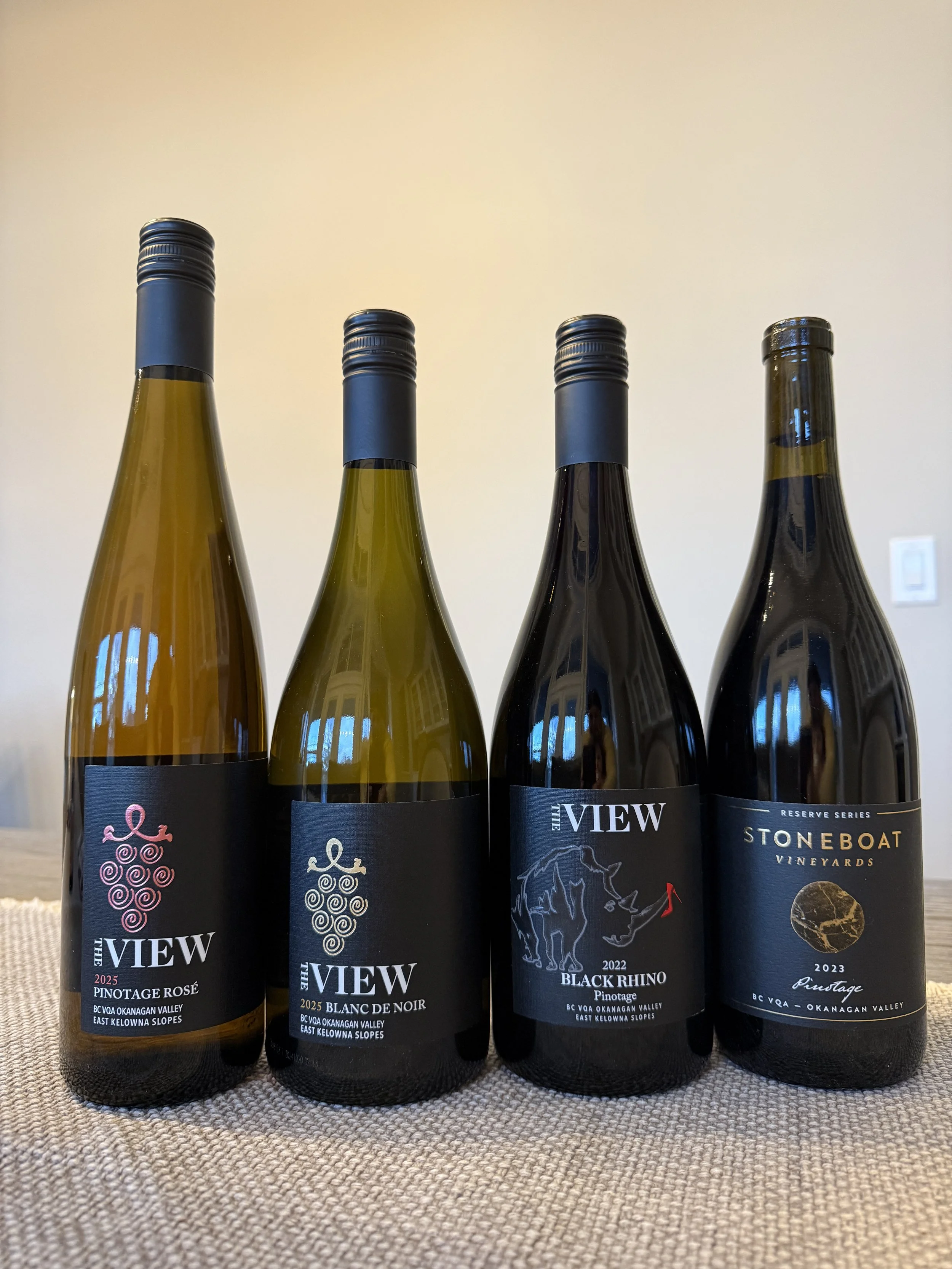
These four wines show just how broad that niche can be.
The View Winery 2022 Black Rhino Pinotage
The signature variety at The View is partially wild fermented and gets 7 months in French and American oak, 36% new. Unlike its namesake, this Black Rhino is considerably even-tempered and shows no aggression towards humans. The nose is fruity and inviting with raspberry, loganberry, ripe black plum, enhanced by aromas of cocoa, earth, and mushroom. The palate is approachably framed by modest acidity and velvety tannins, with a spiced finish. A portion of proceeds goes towards World Wildlife Fun conservation efforts.
The View Winery 2025 Blanc de Noir
Pinotage (58%) and Pinot Noir (39%) are hand-picked early from a single vineyard and whole-bunch pressed under inert gas to minimize colour and phenolic extraction from skins. Fermentation is in neutral barrel (60%) and stainless, using both wild and commercial yeasts. The wine rests on lees for 2 months with stirring. It is pale gold with no hint of blush, and the aromas are bright and elegant: macerated pear, mandarin orange, crabapple, white peach, daisies, and greek yogurt offer considerable range. Freshness is emphasized on the palate, which deftly balances tart flavours and soft texture.
The View Winery 2025 Pinotage Rosé
Composed of 85% Pinotage and the remainder mostly Pinot Noir, the grapes for this single vineyard rosé are given 6-12 hrs skin contact in a Champagne press cycle. The wine is fermented in 16% neutral barrels and 84% stainless steel, with both wild and commercial yeasts. Strawberries and cream is the theme - but there’s more. Red apple, crushed blackberry, sweet pink grapefruit, cherry, and violets grace the nose and palate. A gourmet rosé, likewise crisp and fresh, and beautifully made.
Stoneboat Vineyards 2023 Reserve Pinotage
This rugged and spicy Pinotage is barreled for 18 months in 86% neutral French oak, and 14% American oak, 42% of which is new. Dense and opaque purple, the aromatic depth follows suit with blackberry, black cherry, stewed plums, and dried blueberry and herbs. Elevage has contributed warming notes of vanilla, cocoa, and baking spices. A saline and concentrated palate delivers firm craggy tannins, fresh acidity, and a full body at 14.5% abv. There is much to like, and this Pinotage promises to improve with time.
Blog post written by: Matt Tinney, Contributor, uncorkBC