
Photo credit: Wines of BC
The most planted wine grape in the world is a household name even among people who don't drink much wine. France, Chile, California, Australia, Argentina—the great wine-producing nations have invested heavily in Cabernet Sauvignon, and as the climate increasingly warms, so have the world’s cooler wine regions.
British Columbia is one of them.
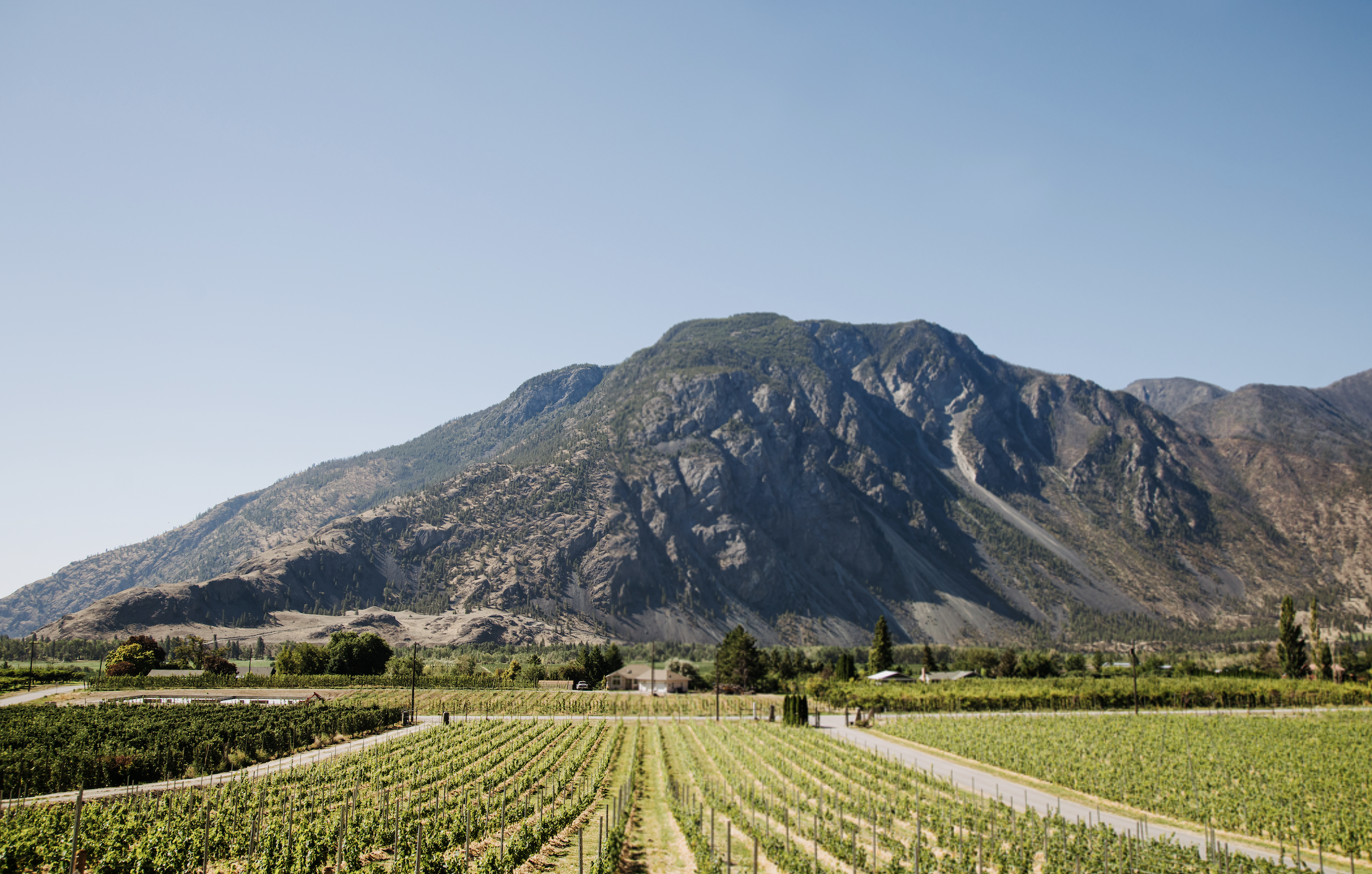
Cabernet Sauvignon is the fourth-most planted red wine grape in the province. Following the severe setbacks of 2024, many varieties lost acreage. With replanting underway, Cabernet Sauvignon now sits at 668 acres under vine. The overwhelming majority are concentrated in Oliver and Osoyoos, where the combination of heat, sunlight, elevation and geography gives this notoriously late-ripening grape its best chance of reaching the finish line.
And that is the interesting thing about Cabernet Sauvignon in BC.
It isn't an easy grape for us. In fact, it’s still something of a fringe variety. But when the conditions line up (and as growers and winemakers learn how to exploit those conditions), it can flex some serious muscle.
Let's look at why this grape is such a demanding proposition in BC, and why the wines that get it right are worth seeking out.
Cabernet’s Biggest Demand: Heat
Cabernet Sauvignon needs a long growing season and a tremendous amount of accumulated warmth to fully ripen. That's why it thrives in places such as Napa Valley and parts of Chile, while cooler regions have traditionally had a more complicated relationship with it.
Bordeaux is the classic example. Cabernet is the dominant red grape on the left bank, but it doesn't always ripen reliably. That's one reason Bordeaux developed its famous blending tradition: Merlot, Cabernet Franc, Petit Verdot and other varieties can compensate when Cabernet doesn't quite get where it needs to go.
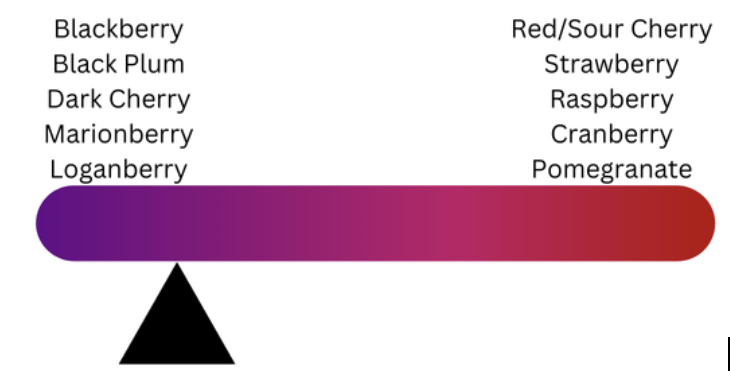
This distinction is important. Cabernet Sauvignon likes warmth, but it isn't simply a hot-weather grape. Extremely hot sites can push the fruit too far in the other direction, producing jammy, stewed flavours and sacrificing freshness. The sweet spot is a long, warm growing season without excessive heat.
That makes site selection critical.
South-facing slopes, reflective or stony soils, proximity to water and other local climatic influences can all help a vineyard accumulate the energy Cabernet needs. At the same time, growers have to protect the grapes from excessive heat and sun exposure. Canopy management becomes a balancing act between exposing the fruit to enough sunlight to ripen, and not exposing it to so much that it suffers sunburn or loses freshness.
In BC, the margin for error can be particularly narrow.
And that's why Cabernet Sauvignon tells us something interesting about our wine industry: making good Cabernet isn't simply a matter of planting the grape and waiting for a hot summer. It requires matching the variety to the site, then managing the vineyard carefully enough to take advantage of every degree of ripening available.
Why The South Okanagan?
This is why Cabernet Sauvignon has found its BC home in the southern Okanagan.
Oliver, Osoyoos and the Similkameen Valley sit in the warmest part of the province's principal wine-growing region. Their combination of heat, sunlight and long growing seasons gives Cabernet the best chance of achieving the fruit development it needs.
Still, some years simply provide more of what Cabernet wants than others. A warm, long season can produce grapes with the concentration and physiological ripeness necessary for a serious Cabernet. A cooler or more challenging vintage can leave the fruit struggling to ripen before autumn closes in.
But this is where BC's wine industry has changed.
Growers have become better at matching varieties to sites, managing canopies, controlling crop loads and making decisions about harvest timing. Winemakers have become increasingly adept at working with the fruit they receive rather than trying to force it into a preconceived style.
The result is that the ceiling for BC Cabernet Sauvignon keeps getting higher.
We're still asking the grape to do something that isn't entirely comfortable here. We're just getting better at asking.
When Cabernet Doesn’t Quite Make It
There is a reason Cabernet Sauvignon has a reputation for being a big, powerful wine.
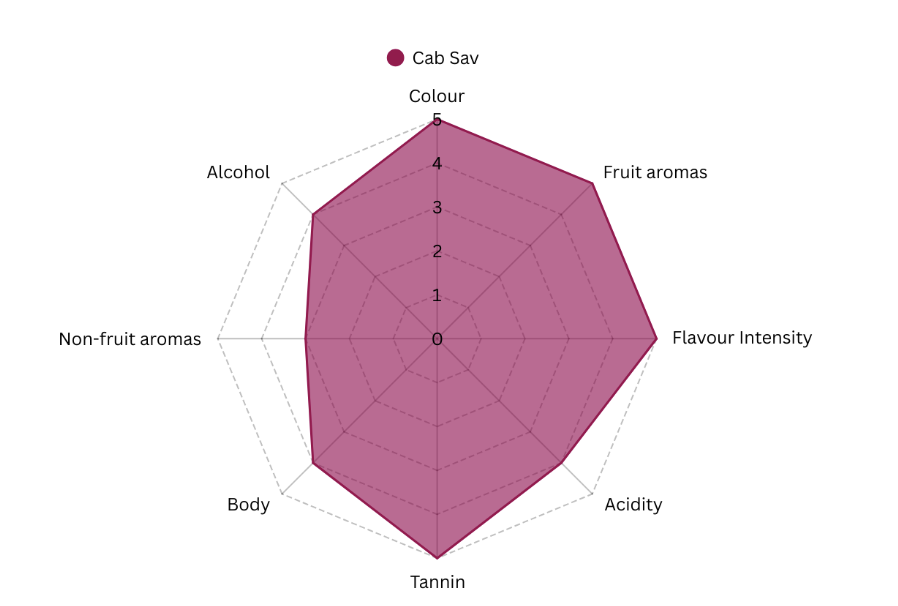
Its grapes have thick skins, contributing significant colour and tannin. When fully ripe, those tannins can give the wine tremendous structure and longevity. When the grapes aren't quite there, however, the result can be considerably less glamorous.
Cabernet Sauvignon is a natural crossing of Cabernet Franc and Sauvignon Blanc, two varieties with distinctly herbaceous personalities. That green streak remains in their offspring.
Under-ripe Cabernet can show pronounced green pepper, vegetal or excessively herbaceous aromas. Those characteristics aren't inherently bad—indeed, the right amount of green character can be part of Cabernet's appeal—but there is a substantial difference between a wine smelling of mint, sage, bay leaf or eucalyptus and one that tastes like somebody dumped vegetable scraps into the fermentation tank.
The same principle applies to tannin.
Ripe Cabernet tannins can be firm and muscular while still feeling polished and fine-grained. Under-ripe tannins tend to be more aggressive, astringent and drying. This is one reason young Cabernet can benefit enormously from aeration. Give it time in a decanter, an aerator, or even just a generously swirled glass, and you can sometimes watch the texture soften.
Ripeness is the difference between Cabernet's strengths and its weaknesses.
A Cabernet can have plenty of tannin and still feel thin if the fruit isn't concentrated enough to support it. Conversely, a wine with ripe fruit, lively acidity and muscular tannins can feel both powerful and refreshing.
That's the balance I look for in BC Cabernet: concentration without heaviness, structure without brutality, and ripeness without losing freshness.
Cabernet Sauvignon In Pink
There is another way to express Cabernet Sauvignon in BC, and it may actually make a great deal of sense for our climate: rosé.
A growing number of BC producers are experimenting with Cabernet Sauvignon Rosé, creating a varietal-specific style that sits somewhere outside the traditional Cabernet playbook. It isn't an attempt to turn red Cabernet into something it isn't, nor does it necessarily compete with the full-bodied reds that make the variety famous. Rather, it offers another expression of the grape.
And from a viticultural perspective, it makes sense.
Rosé does not require Cabernet grapes to reach the same level of ripeness, concentration and tannic maturity expected of a serious red wine. Grapes can be picked earlier, retaining the naturally high acidity that BC's climate can provide, while still offering the characteristic fruit and subtle herbal qualities of Cabernet Sauvignon.
I find this particularly interesting because it reframes the question we're asking of Cabernet Sauvignon in BC.
Instead of simply asking, "Can we ripen Cabernet Sauvignon enough to make a great red?", we can also ask, "What can Cabernet Sauvignon do particularly well in our climate?"
Cabernet Sauvignon Rosé won't replace the classic red expression of the grape—and nor should it. But it demonstrates that a variety doesn't have to be pushed to the absolute limits of ripeness to produce something compelling.
In a province where Cabernet Sauvignon is still operating near the edge of its ideal growing conditions, that flexibility could prove to be one of its strengths.
The Winemaker’s Impact
Once the grapes arrive at the winery, the decisions continue.
Cabernet's thick skins mean that extraction can have a significant impact on colour, flavour and tannin, while barrel maturation can help integrate and soften those tannins. The type of oak, amount of new oak and time in barrel all influence the finished wine.
Cabernet already brings plenty of personality to the table, so the best winemaking decisions frame and highlight that personality rather than obscure it. As with so much in wine, restraint can be just as important as power.
To Blend Or Not To Blend?
Cabernet Sauvignon can be bottled on its own or blended with other varieties. In Bordeaux, blending is fundamental to the identity of the region, allowing winemakers to balance Cabernet with varieties such as Merlot and Cabernet Franc. BC producers have similar options, with Merlot adding softness and plush fruit and Syrah contributing savoury, peppery or meaty character.
In a variable climate, blending also gives winemakers another tool: if one variety performs less well in a particular vintage, another can help fill the gap. The wines I'm tasting here are presented as single-varietal Cabernet Sauvignon, although some may contain a small percentage of other grapes.
So, Can BC Really Pull Off Cabernet Sauvignon?
I think the answer is increasingly yes—but with an important qualification.
Cabernet Sauvignon is still close to the ripening frontier in BC.
That's part of what makes it interesting.
We're not growing it because success is guaranteed. We're growing it because certain sites can provide enough heat, and because viticulture and winemaking have become sophisticated enough to make the most of those conditions.
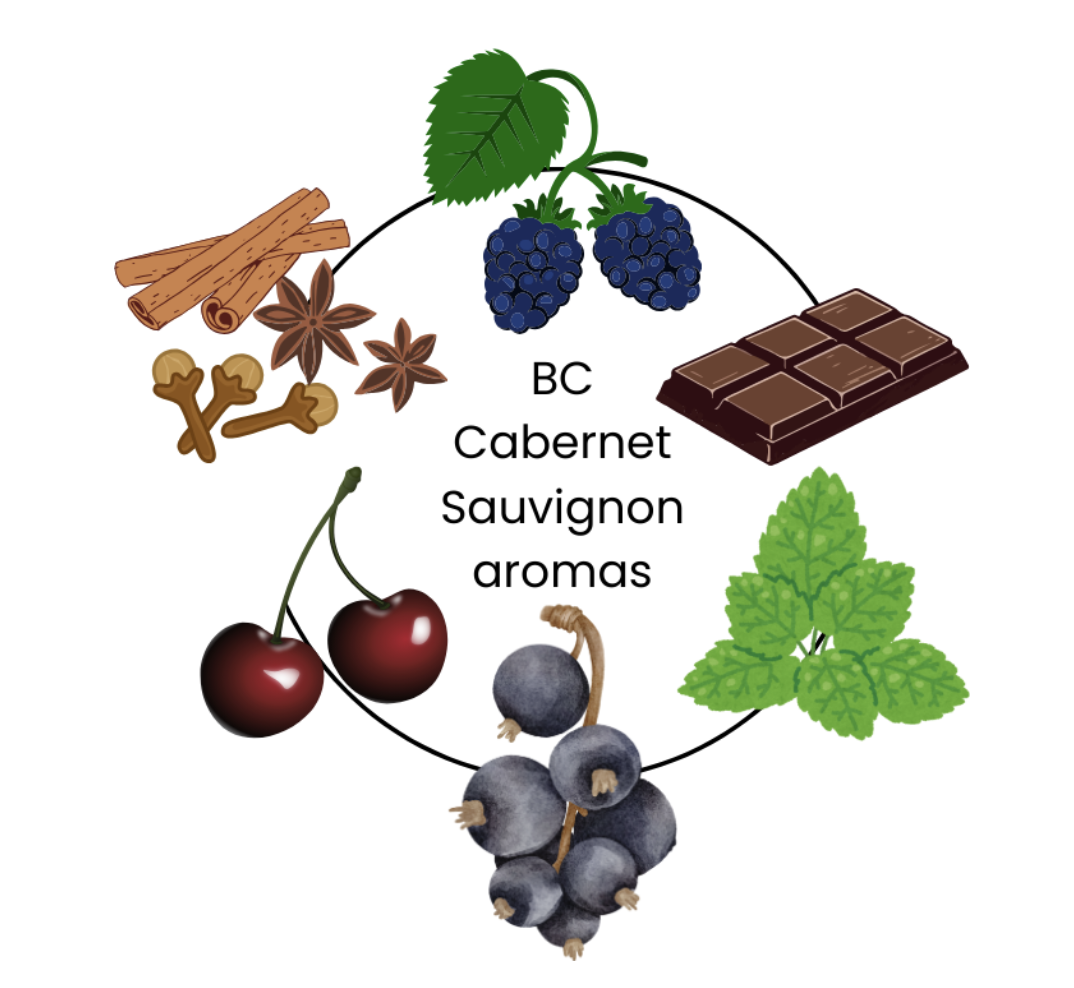
When everything lines up, BC Cabernet Sauvignon can deliver concentrated black fruit, freshness, fine-grained but powerful tannin, savoury complexity and the structure to develop with time.
It won't happen every vintage. And it shouldn't have to.
The pleasure is in finding the producers and vintages that make Cabernet Sauvignon flex its muscle.
As always, I encourage a spirit of discovery. BC wine is still figuring out exactly what it can do, and Cabernet Sauvignon is a fascinating variety to watch as we find out.
One glass at a time.
Reviews
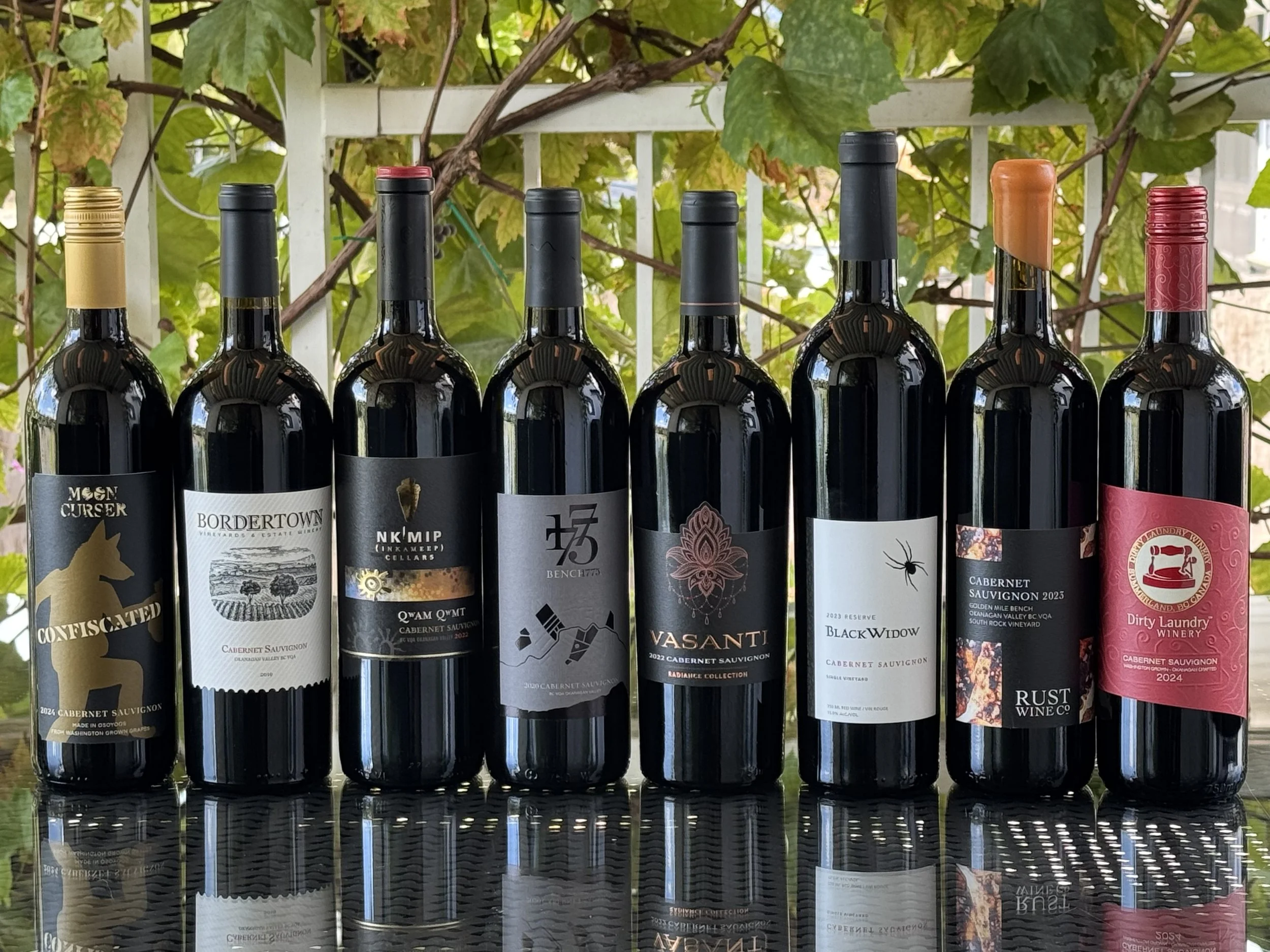
Here are 8 British Columbia Cabernet Sauvignons that support the case of this variety’s place in BC.
Moon Curser Vineyards 2024 Confiscated Cabernet Sauvignon (Gold, All Canadian Wine Championships)
The latest release of Cabernet Sauvignon from Moon Curser uses grapes ‘confiscated’ from just two hours south in Lake Chelan, Washington. After fermentation of whole berries in stainless steel tank, the wine is barreled in French oak (37% new) for 12 months. Ripeness is not far off from Moon Curser’s usual style, and this wine shows a distinct savoury side as well, with sage, cedar, and dried mushrooms joining the core of dark plum and cherry, black currant, tart blackberry, and cocoa dust. The integration of flavours and supple tannins are unusual for a wine this young. Rich and full but still ready for drinking now - perhaps with a blue cheese burger.
Bench 1775 Winery 2020 Cabernet Sauvignon
A new release and Member Exclusive, this Cabernet Sauvignon is farmed entirely on the Naramata Bench, and aged 24 months in 70% new French oak. Red plum, black currant, dark cherry, and rhubarb are counterbalanced by dried leaves and earth, bell pepper, and baking spice aromas. The dark and imposing facade gives way to an approachably soft style, with ripe acidity and soft tannins. Flavour concentration peaks mid-palate, allowing for a restrained, fine-grained finish.
Vasanti Estate Winery 2022 Radiance Collection Cabernet Sauvignon (Silver, National Wine Awards of Canada)
This Cabernet Sauvignon is grown on Vasanti’s East Bench and West Bench Osoyoos vineyards, and is given 30 months in neutral French & European oak. The Radiance Collection represents small-lot, premium South Okanagan wines - only 96 cases of this one are produced. Juicy, tart fruit forms the vanguard of this forward Cab Sauv. Black currant and fresh and stewed dark plum and cherry are completed in Black Forest style by a duo of shaved chocolate and vanilla cream. The palate is saline and fresh, with firm and well-managed tannins, acidity polished to a shine, and a chocolate biscotti finish.
Rust Wine Co. 2023 Cabernet Sauvignon
South Rock Vineyard on Oliver’s Golden Mile Bench is the source of this promising young Cabernet. An east-facing site on gravelly clay and fluvial soils, the resulting wine is dense with sweet dark fruit, while retaining balance and nuance. Following a whole-berry ferment, the wine is matured in 20% new French oak. The nose offers aromas of cocoa, cedar, bay leaf, and smoke layered beneath ripe blackberry, black cherry, and cassis. Marbling acidity and tannic grip electrify the palate, which has likewise rich dark fruit flavours, and finishes on black coffee phenolics. This wine will continue to come together with time, but it’s already impressive.
Bordertown Vineyards & Estate Winery 2019 Cabernet Sauvignon (Platinum, National Wine Awards of Canada)
South Okanagan reds have few better champions than Bordertown, located in the arid heat of Osoyoos. Gravel in the sandy soils retains warmth and aids in ripening. Aged 12-18 months in French oak, the fruit reigns above all else. The pristine and intense aromas and flavours are bang on for this variety: black currant, loganberry, dark cherry, cedar spice, and green peppercorn. The structure pulls its weight as well, scaffolding all that ripe fruit with lively acidity and abundant glossy tannins. Cocoa and toasted flavours linger on the long finish, with a final reminder of Osoyoos ripeness. Winning Platinum at WineAlign in 2022, this stands up exceptionally well today, with plenty of years left. Compared to similar wines from California or Italy, the $50 price tag is good value here.
Nk’mip Cellars 2022 Qwam Qwmt Cabernet Sauvignon (Platinum, National Wine Awards of Canada)
Qwam Qwmt wines are the premium tier from the Nk’mip portfolio. The Cabernet Sauvignon comes from a vineyard directly below their Osoyoos winery. After destemming, crushing, and fermenting, the wine is pressed to French oak to age for 18 months. It is undeniably South Okanagan, full and generous, yet not lacking in depth. Black currant, bramble, stewed plums, bell pepper, cocoa, and warm spices on the nose melt uninterrupted onto the palate, where a swell of acidity and silky tannin hold fast, keeping this wine in stasis for several more years, although it drinks beautifully now. The retail price of $41 is good value for this style.
Black Widow Winery 2023 Reserve Cabernet Sauvignon
Receiving extended time in barrel, this Reserve wine is from the Boulder Beach Vineyard on Naramata Road. The wine spends 21 months in French oak, and is bottled unfiltered. This will be another standout from the 2023 vintage, which was marked by reduced yields across the interior due to extreme winter temperatures. The powerful nature of the variety is reflected throughout this serious red, revealing layer upon layer of cherry, dark berries, black currant, bell pepper, cocoa, sage, and spices. A woodsy freshness stitches it all together, on a palate of notable fresh acidity, grippy tannins, and remarkable length. Enjoy now with a good striploin, or give those tannins a few more years to resolve.
Dirty Laundry Winery 2024 Cabernet Sauvignon
Grown in Washington and made in Summerland, this is 90% Cabernet Sauvignon and 10% Merlot. The barrel program is 75% French and 25% American, aging for 15 months. Dusty dark cherry and stewed plum aromas provide modest fruit to an otherwise savoury slant of rhubarb, chocolate, and spice. Palate structure is familiar for Dirty Laundry, with acidity evenly matched to tannins which are hefty, yet soft and approachable. 13.5% abv underlies the fresh and sociable style. At a bargain of $29.99, enjoy liberally - just keep it away from your white linens.
Blog post written by: Matt Tinney, Contributor, uncorkBC