
The Underdogs of BC Wine
Photo credit: Wines of British Columbia
For such a small wine producing region, BC has remarkable diversity. All the major ‘international varieties’ have found their places to thrive among the hills, valleys, and islands of our province. These abundant actors will always be at the top when the credits roll.
If you’re looking for something different - an unexpected expat from Austria, Spain, or South Africa - look for the underdogs of BC wine. These grapes are the basis of well-established and classic styles unique to their regions. But what happens when they go abroad and set root in distant soils?
Over the decades, winemakers have snuck in some random, far-flung, back-alley cultivars, just to see how they grow here in BC. Experimentation and innovation have always been part of our wine culture.
Most of the time, these rare wines are footnotes in a producer’s portfolio, a spark of intrigue that maybe sets them apart, or a hidden gem for the curious wine enthusiast. Others have built a reputation on these uncommon varietals - like Moon Curser, for example. The Osoyoos estate is well-known for rich Cabernet Sauvignon and Syrah, but also award-winning Touriga Nacional, Carménère, Tannat, and Tempranillo. Terravista Vineyards, on the Naramata Bench, has become a North American standard-bearer for Albariño.
Are these rare finds just marketing tricks though, that are different for the sake of being different? After tasting many of them, I can confirm that’s definitely not the case. True, some may be cultivated because it’s simply unique. Others may have been chosen because they are well suited to the regional climate and terroir, or fit well with the house style.
It actually doesn’t matter what the reason is, the proof is in the glass. BC winemakers put the same passion and energy into these underdog wines, adding splashes of colour and personality to this industry. For casual tasters and wine tourists, it might be another fun sip, or even a new favourite. To the curiosity-afflicted, these wines may be a gateway to discover more of the world of wine. In any case, they add a dimension to the winery’s unique story.
Below I am featuring a handful of BC producers to highlight their underdog wines.
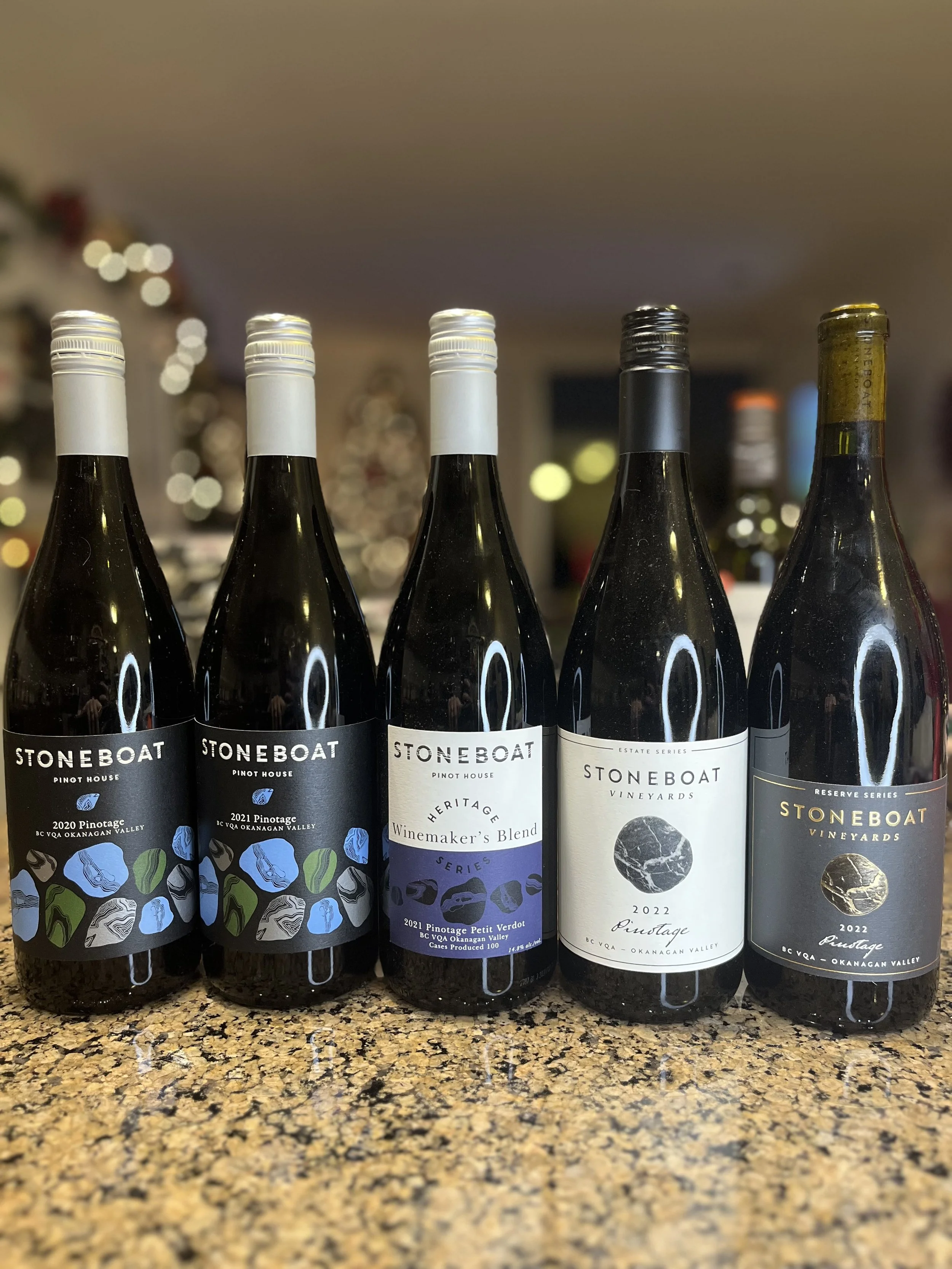
Stoneboat Vineyards - A South African flagship far from home
Not just Charmat method sparkling wine specialists, they’ve taken Pinotage equally seriously on their Oliver estate. Owner Lanny Martiniuk was the first in BC to grow Pinotage, and began making wine from his own vines when he started Stoneboat in 2005. This grape is South Africa’s signature varietal, a crossing of Cinsault and Pinot Noir. The wines are deeply pigmented and have a distinct rich earthiness, dark fruit profile, and are usually fuller in body. Planted in 1998, Stoneboat’s Pinotage vines are now approaching 30 years old. On their own or experienced as a vertical tasting, these wines make a compelling case for Pinotage in the Okanagan.
2020 Pinotage
From a warm and balanced year, we get a wine with great fruit concentration, fresh acidity, and fine tannins. Aromas and flavours of sour cherry, dried cranberry, prune, dark chocolate, earth, violets, and spice. The fruit is first and the savouriness is subtle. Characterized by depth and a little darkness, while sharing similar freshness and delightfully chewy texture to the other vintages. Still humming along nicely, in no danger of cresting.
2021 Pinotage
Hand picked from their Orchard Grove vineyard, stainless steel fermented with two daily pump overs, and aged 15 months in French and American oak barrels, 32% new. The heat dome and severe forest fires may have necessitated upping the oak treatment, and it’s well made. The bold savoury punch sets it apart, casting out garrigue, sandalwood, potpourri, and modest mushroom over the rich fruit beneath: stewed plum, blackberry, dark cherry, and fig jam. Structure is hedonistic, acidity somewhat reduced compared to vintages on either side and softer tannin too. This matches well with the chocolatey, meaty, ripe, decadent style. The long finish ends with sweet tobacco and smoke.
2022 Pinotage
Hand picked, stainless steel fermented, and aged 18 months in French (64%) and American (36%) oak, 15% new. Remarkably fresh and lifted, the aromas of blackberry, black plum, black currant, and strawberry fruit leather dance gracefully while vanilla, clove, dried flowers, and beef jerky stand by. The balance and interplay between fruit and savoury is supported by bright acidity and steely tannins, all of which animate the wine through a sumptuous finish. The tartness beckons for food - best with a good braai or anything chargrilled.
2021 Heritage Winemaker’s Blend Pinotage Petit Verdot
The blend is 50/50 Pinotage and Petit Verdot, aged 15 months in French oak barrels (25% new). Kapow! This rustic blend grinds it out for a memorable marriage of grace and rigidity. Sticky preserves of red, black, and blue fruit are complemented by cocoa, florals, and spice. This is a full bodied style with just under 15% alcohol, fresh acidity, and firm but supple tannins. Tart concentrated berries tumble down the long, spicy finish. Power can corrupt, but not in this case.
2022 Pinotage Reserve
This bottling follows the pattern and production volume (354 cases), again with 18 months aging but now in 93% French oak and 7% American oak, with a larger proportion (43%) of new barrels. Freshness and textural hallmarks have not been dulled by all that wood - the sour red cherries and plums here are set in baked graham cracker, vanilla, and sweet tobacco. Sturdy but fine-grained tannins and marbled acidity create a robust structure that’s just shy of wild. Giddy up.
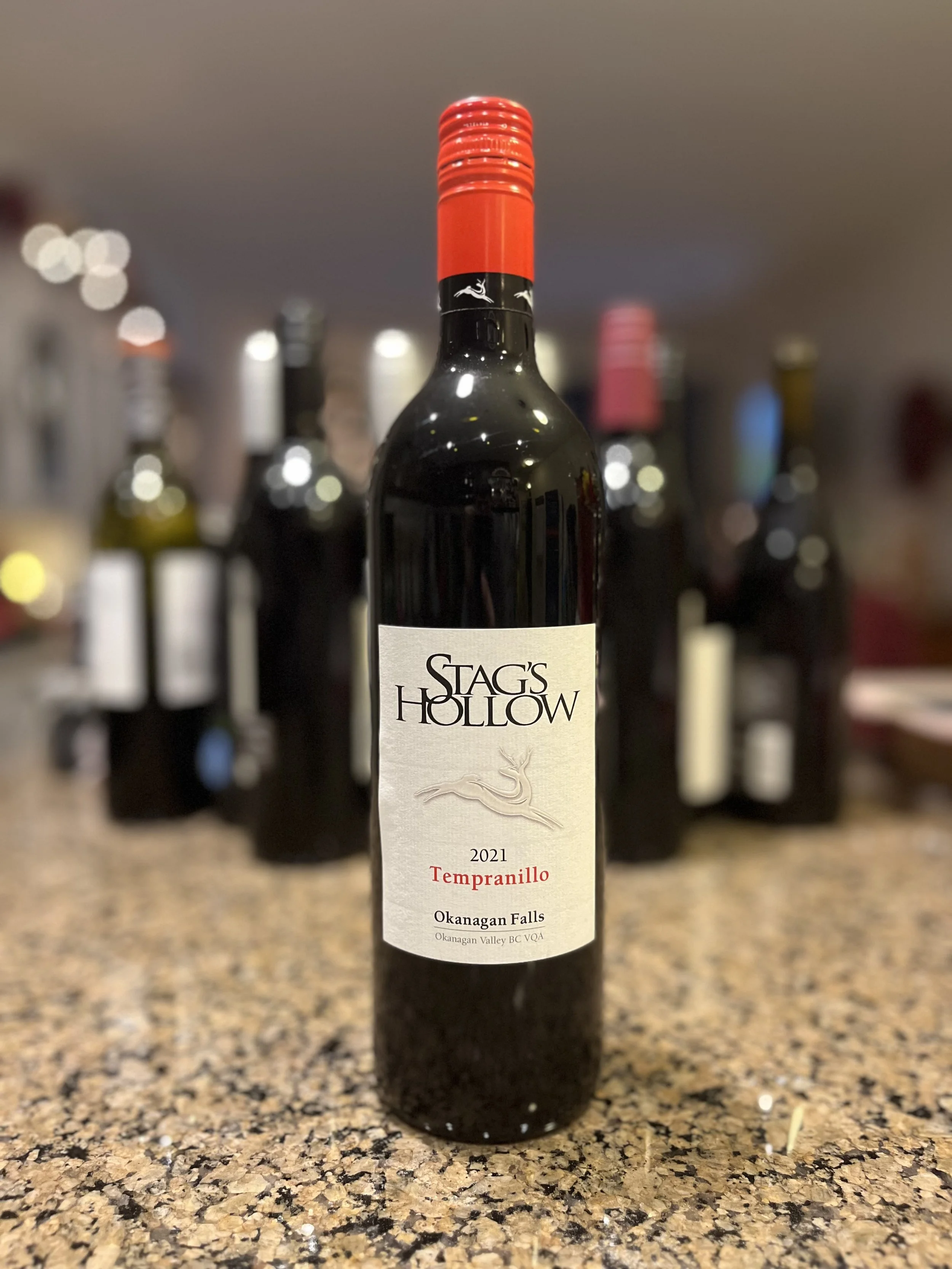
Stag’s Hollow Vineyards - King of Spain
In addition to world-class Chardonnay, Pinot Noir, and Bordeaux reds, Stag’s Hollow in Okanagan Falls makes some underdog wines, including Tempranillo. It’s the grape behind Rioja, and Spain’s most-planted varietal. It can make complex, often age worthy wines with red and black fruit flavours, tobacco, leather, and herbs.
2021 Tempranillo
The majority of fruit is from Shuttleworth Creek vineyard, with a little (they don’t say how much) Syrah blended in to enhance the spice quality. Fermentation is in 1-ton bins, with 2-3 daily hand punch downs. The wine is pressed to French (51%) and American (49%) oak barrels, 11% of which are new, and aged for 20 months. It is bottled unfined and unfiltered. The nose is fairly quiet, cherries and dark plums dusted in cocoa, with elements of olive, leather, and gentle spice. This sleeper comes alive on the palate! Dense with ripe fruit and a savoury backbone, velvety tannins, and a long balanced finish. Okanagan nurture meets Tempranillo nature.
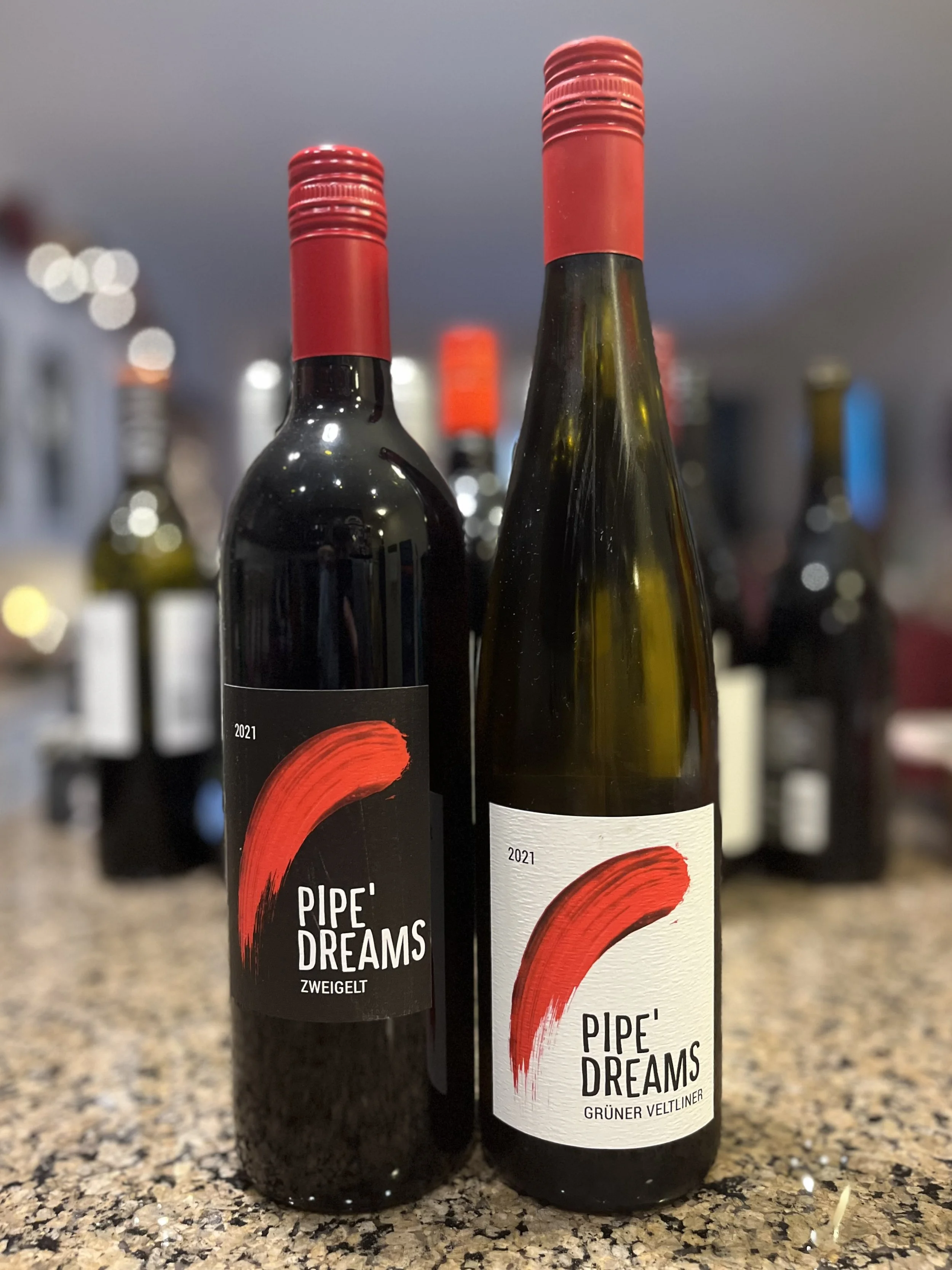
Pipe’ Dreams - Austria’s top red and white
The Khangura family owns and operates this north Oliver estate. Their motto: “Taste the lesser-known, and raise a glass to your dreams.” The two most common varietals in Austria are not entirely uncommon in BC, but haven’t yet become part of the vernacular. Zweigelt is a lighter red similar to Pinot Noir, being bright, tart, and fruity with some savoury notes. Grüner Veltliner is a dry, crisp white often with some vegetal character.
2021 Zweigelt
This pale garnet Zweigelt comes from estate grown fruit and is evidently aged in barriques before bottling. It’s soft and light at 11.9% abv with lively acidity and minimal tannin. The nose and palate are attractive, with dusty red currants and plum, dried cranberry, stewed strawberries, incense, and red liquorice. It’s ripe, red fruit all the way through to a dry, spiced finish. This is the red to reach for from their portfolio.
2021 Grüner Veltliner
If this is the first BC Grüner you try, it’s a decent introduction. Light and creamy, it’s a rounded expression with yellow plum and apple, bruised lemon, bean sprout, and accented by honey and salinity. Acidity is almost where it needs to be to really freshen up the profile. Still, it’s my pick of the whites from their portfolio and is well suited to a simple cucumber salad.
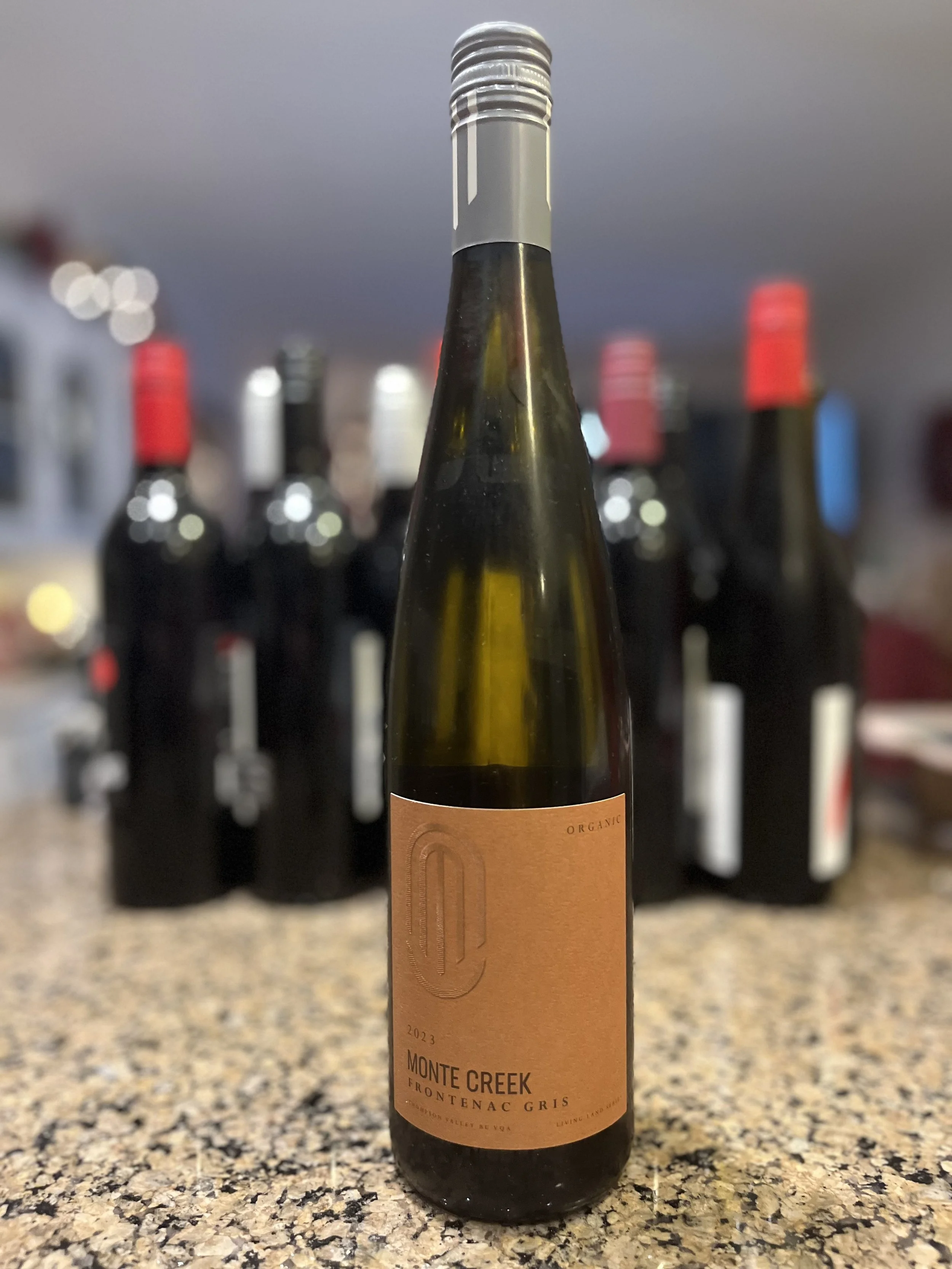
Monte Creek Winery - Embracing Hybrids
The Thompson Valley gets plenty of warmth through the growing season to ripen Pinot Noir, Chardonnay, Merlot, etc. but the freezing winters are endured better by cold-hardy hybrids like Frontenac Gris. Many still dismiss hybrids as inferior but producers like Monte Creek demonstrate that they still have a role to play, particularly in a changing climate. Once you taste, you’ll understand.
2023 Frontenac Gris
Delightful, this fruity white has come dressed smartly business casual. Ripe pear and grapefruit, kiwi, lemon peel, and pea blossoms fill out a juicy palate wrapped in flaky pie crust. Creamy and off dry, the edges are soft and round, with a pleasant finish of concentrated citrus. Stylishly leveled up but still unpretentious.
Final thoughts
If it’s a competition with the top dogs, these interlopers will never win. But if going off the beaten path and finding rare gems appeals to you, then BC wine has much to offer. Besides - welcoming outsiders, embracing and celebrating differences, and making something amazing from humble beginnings - that’s pretty Canadian, isn’t it?
Blog post written by: Matt Tinney, Contributor, uncorkBC