
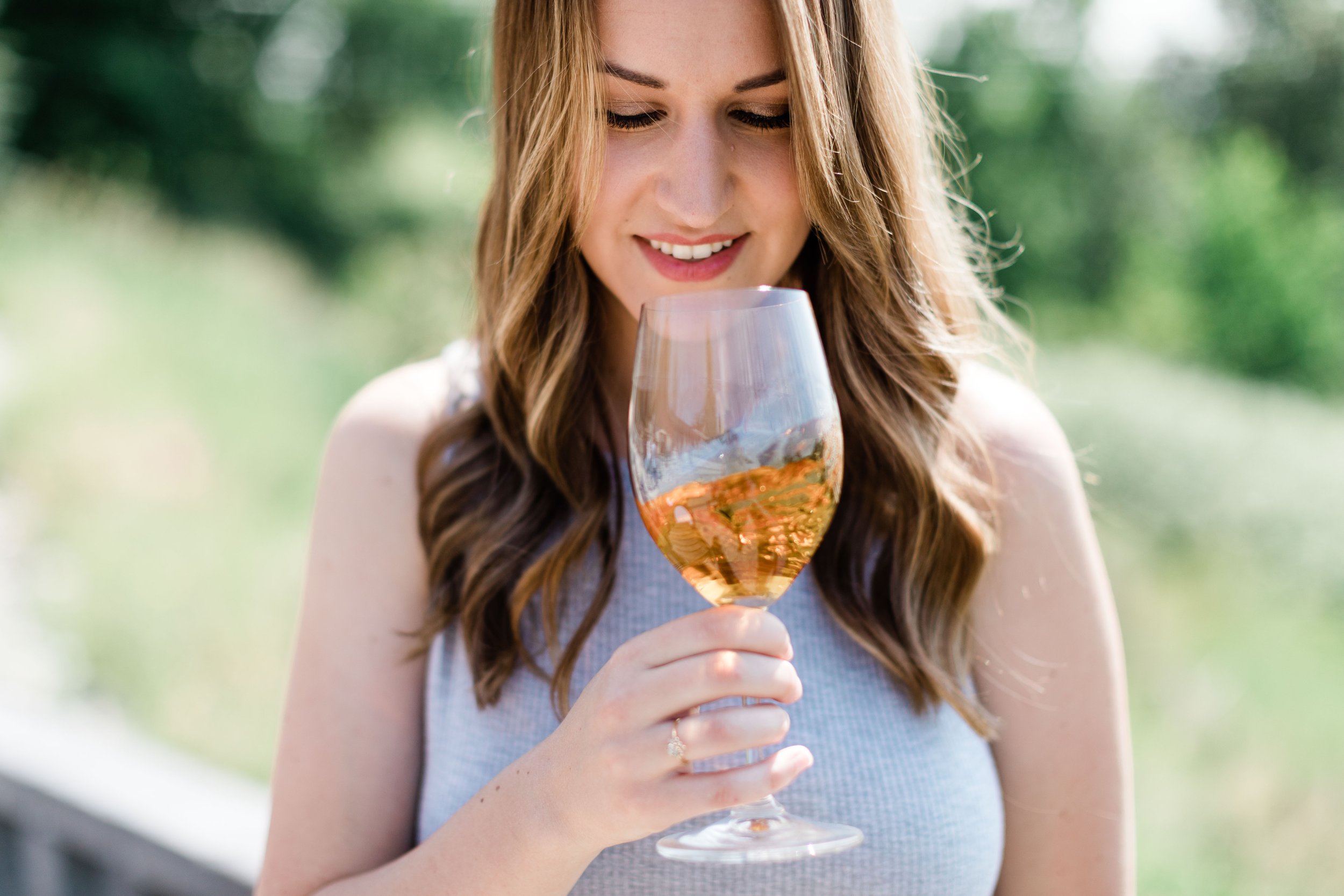
Photo credit: Wines of BC
Ancient techniques, familiar BC grapes, and four wines that make the case for skin contact.
“It’s a white wine, made like a red wine.”
That’s how most of us are primed to respond when someone asks, “What is orange wine?” It’s accurate. Also, not helpful. Because once you understand that orange wine is made by fermenting white grapes with their skins, the more interesting questions begin. What does skin contact actually bring to a wine? Why are winemakers increasingly interested in it? And, perhaps more importantly for us, what role does orange wine have to play in British Columbia?
BC has no shortage of aromatic white varieties, cool-climate acidity or winemakers willing to experiment. On paper, it should be fertile ground for orange wine. But does the style actually amplify what BC does well, or obscure it?
Conventionally, white wine is made by pressing grapes and fermenting the resulting juice, largely separated from the skins, seeds, and stems. Exceptions do apply, but bear with me here.
Red wines, by contrast, are generally fermented with their skins and seeds, and sometimes stems, before being pressed—days, weeks, even months later. This draws out colour, flavour, and texture (including tannins) into the wine.
So when white grapes like Pinot Gris or Gewürztraminer are macerated together with their skins over longer periods of time, more colour and phenolic compounds are extracted, and you get an orange or amber wine. The duration and timing of skin contact can vary considerably. Some wines ferment entirely on their skins, while others undergo substantial maceration before being pressed and fermented separately. The result is a spectrum of colour, texture and flavour rather than one narrowly defined style.
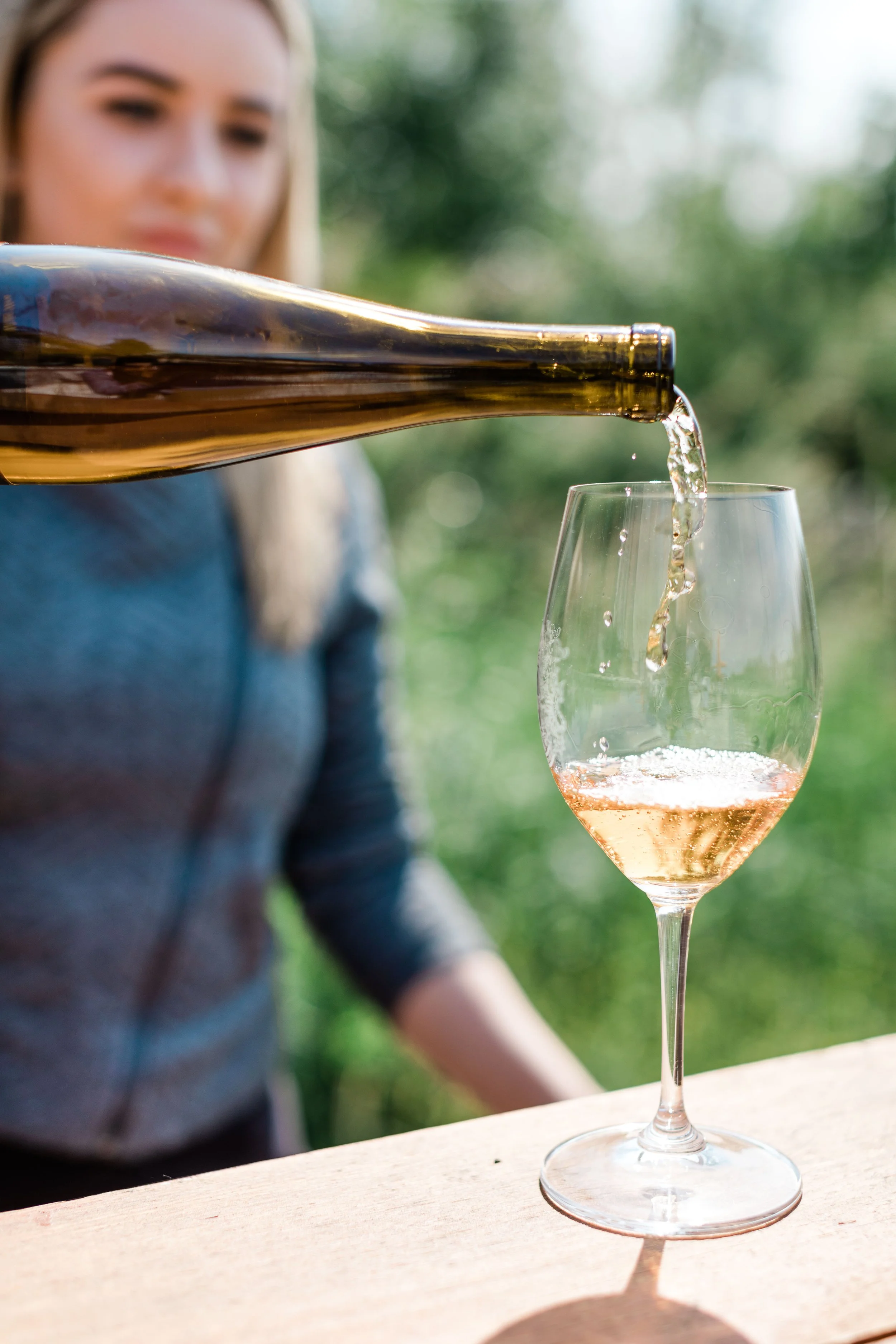
Photo credit: Wines of BC
The practice has ancient roots, notably in Georgia, where winemaking traditions involving buried clay vessels known as qvevri extend back thousands of years. Skin-contact white wines also have deep traditions in northeastern Italy and neighbouring Slovenia, where pioneering producers helped bring the style back into international prominence.
Orange wines today are often considered ‘natural’ wines, and while there is overlap, the two categories are not synonyms. The natural wine movement often employs methods like extended maceration, spontaneous fermentation, low intervention, use of amphorae, minimal sulphur, etc. in the production of skin-contact white wines. But a technically controlled, inoculated, temperature-regulated skin-contact white is still an orange wine.
What does BC bring to the orange wine table?
BC grows several varieties that can become especially interesting with skin contact. Pinot Gris is an obvious one because it's ubiquitous, and its pink-grey skins can contribute both phenolics and striking copper/salmon colour. Gewürztraminer's aromatic intensity and pigmented skins make it another compelling candidate. Riesling offers a different proposition: high natural acidity and intense aromatics against which additional texture and phenolic structure can play.
Acidity is a prized commodity in wines, and is a defining feature of many BC wines. When skin contact introduces tannin, grip, bitterness, and broader texture, BC’s natural acidity provides the counterweight. Instead of becoming heavy or ponderous, a successful wine can have phenolic weight without sacrificing freshness.
Dedicated competition categories for orange wines at both the National Wine Awards of Canada and All Canadian Wine Championships suggest that orange wine is gaining recognition as a distinct style, although its place in the mainstream BC wine market remains less certain.
BC doesn’t have centuries of appellation rules prescribing what Pinot Gris, Gewürztraminer, or Riesling must look like. That gives us the freedom to think outside the box, with orange wine giving producers another avenue for exploring varieties already established here. Perhaps BC's diversity of wine styles isn't a weakness, but an advantage. Orange wine rewards exactly the sort of experimentation that a young, evolving wine region can afford.
But what’s the point?
I would reject the notion that orange wine is somehow more virtuous because it has skin contact, or more interesting simply because of its colour. Like any other wine, it has to stand on its own merits. Clearly, BC can make orange wine, and it has its fans. But does extended maceration genuinely transform familiar varieties into something more distinctive or expressive?
The opportunity is clear, but so is the risk. At its best, skin contact should add texture, structure and complexity without sacrificing the energy that makes BC whites so appealing. At its worst, the technique overwhelms the very characteristics that make these wines worth exploring.
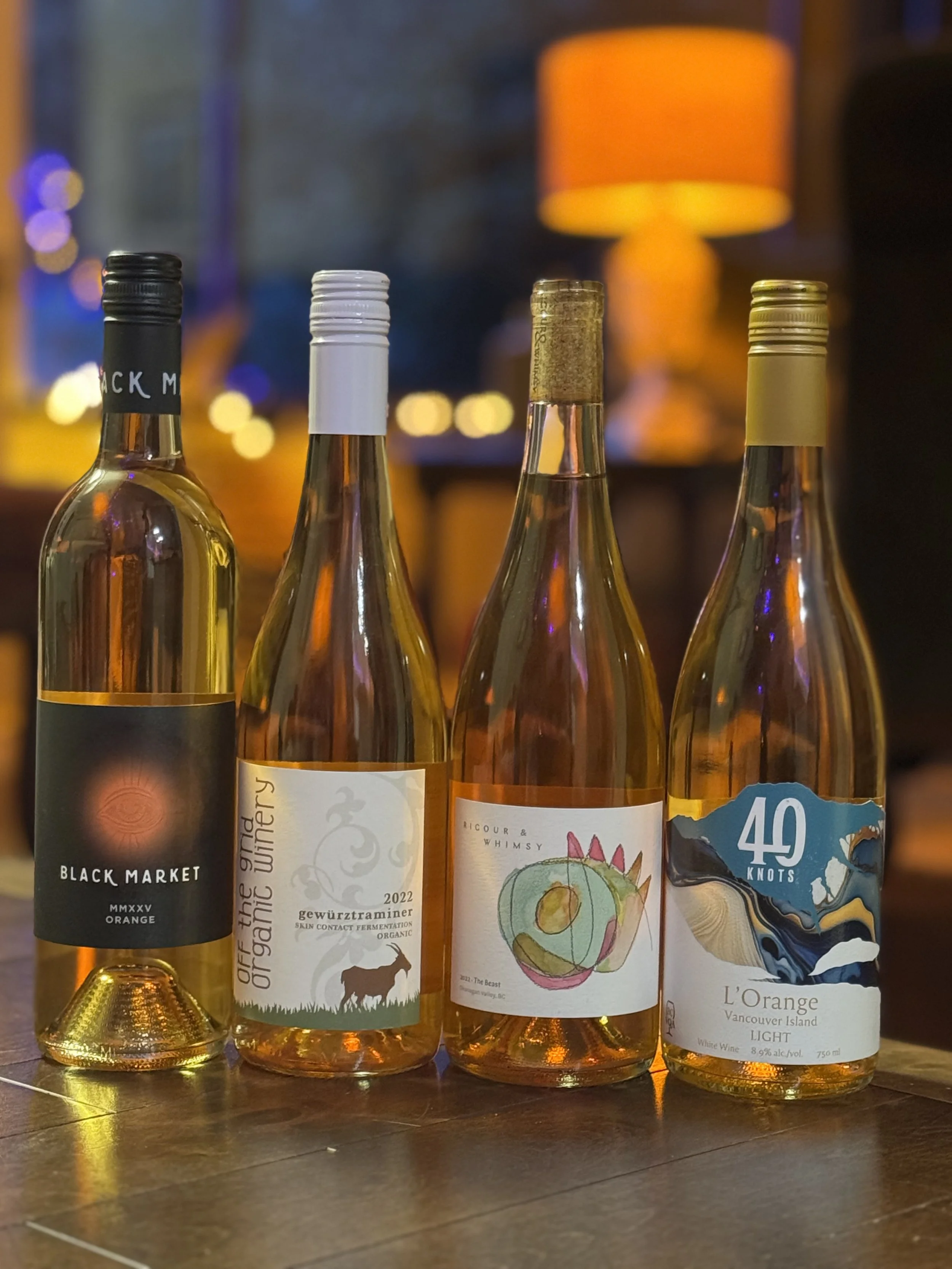
Four BC producers have submitted their interpretations of orange wine for this feature. Different grapes, different approaches, and potentially very different results. The question is whether what's happening on the skins translates into something worthwhile in the glass.
Black Market Wine Company 2025 Orange (Double Gold, All Canadian Wine Championships) - Sold Out
Gewürztraminer from Vantage Point Vineyard in Kaleden is fermented with ambient yeast and macerated for 12 days. Fermentation was completed off the skins in stainless steel, followed by 5 months aging sur lie. The aromatic character is still predominantly fruit-driven, opening with plum, melon, white peach, and juicy pear. Exotic flair floats through the nose and palate bringing tropical blossoms, cinnamon, orange peel, and honey. The palate is marked by pronounced flavour concentration, moderately firm tannic grip, and fresh, rounded acidity, tapering off into a balanced finish. Approachably fruit-forward and great value (while it lasted) at $26.
Off The Grid Organic Winery 2022 Skin Contact Gewürztraminer
One of two skin contact Gewürztraminers in Off The Grid’s portfolio, this version is fermented on skins for 20 days with two daily punchdowns, then finished cold in stainless steel. A whole new side of Gewürztraminer is shown here, yet the personality is familiar. The nose is laden with fruit and florals and drifts into red wine territory with aromas of poached pear, jasmine, baked peach, cherry turnover, boysenberry, and huckleberry. There is light crunchy tannin structure, medium acidity, and a round, ripe body that fills the palate in a very satisfying way. A delicious chameleon.
40 Knots Winery 2024 L’Orange
Comox-grown Schönburger is fermented whole-berry with indigenous yeast in terra cotta amphorae for 3 months, with no malolactic conversion. ‘Light’ appears on the back label to indicate that this wine is only 8.9% abv, while the wine is decidedly dry at only 0.5 g/l residual sugar. This is a distinctly coastal take on orange wine, bursting with floral and tropical fruit aromas like honeysuckle, fig jam, peach pie, apricot, star fruit, and honeyed apples, while the palate is surprisingly spare and delicate, light in body with modest, fine-grained tannins, and melon rind on the finish. With bitterness not fully supported by flavour concentration, this wine lends itself well to foods like semi-firm cheeses, seared halibut, or za’atar-spiced flatbreads.
Rigour & Whimsy 2022 The Beast
Known for its eclectic style and ‘natural wine’ approach, Rigour & Whimsy created the 2022 The Beast using 60% Riesling and 40% Muscat, fermented on skins for 2.5 months then aged in neutral French puncheons for 36 months. Pouring a deep orange, there are baked apple, pear, and apricot aromas within a spice market of sarsaparilla, clove, cardamom, and pickled mustard seed. Riesling’s smart acidity comes through, along with ample firm tannin which offers serious textural grip without heaviness. The finish produces pleasant waves of ginger, baked apricot, and white pepper.
The four wines make a convincing case for orange wine's place in BC, although not without qualification. Extended skin contact brings new dimensions of texture and structure, while familiar varieties take on less familiar personalities. Fruit and spice interact differently, florals shapeshift, and tannin introduces a grip rarely encountered in conventional whites. Importantly, the acidity and energy that characterize so many BC wines remain largely intact.
Not every expression achieves the same balance, and orange wine isn't likely to become everyone's preferred way to drink Gewürztraminer or Riesling. But perhaps that's beside the point. Orange wine doesn't need to replace conventional whites, or appeal to everyone, to justify its place in BC. It simply needs to offer something worthwhile that those wines don't.
On the evidence of these four bottles, it does.
Blog post written by: Matt Tinney, Contributor, uncorkBC